29 Sep 2026
The Hong Kong Convention has now been in force for more than a year.
Before 26 June 2025, much of the industry's attention was on when the Convention would enter into force, whether recycling countries would be ready and how existing yards would adapt.
Those discussions have changed.
Today, when we speak with owners about a vessel approaching recycling, the questions are much more practical. Is the IHM ready? Is the selected facility properly authorised? When does the Ship Recycling Plan need to be completed? What is required for the final survey? How does the IRRC fit into the delivery schedule? And what happens if another regulatory regime also applies?
This is where the Hong Kong Convention, or HKC, becomes relevant to the actual recycling transaction.
The process is manageable when preparation starts early. Difficulties tend to arise when the compliance work is left until the vessel is already close to delivery, or when one certificate is assumed to take care of every requirement.
For owners considering recycling a vessel, it helps to understand how the different parts fit together.
The Hong Kong International Convention for the Safe and Environmentally Sound Recycling of Ships was adopted by the International Maritime Organization in 2009 and entered into force on 26 June 2025.
It was developed specifically for ships reaching the end of their operational lives.
Its scope goes well beyond what happens after a vessel reaches a recycling facility. It also deals with hazardous materials during the ship's operating life, surveys and certification, preparation before recycling, the authorisation and operation of recycling facilities, worker safety, environmental controls and reporting.
The Convention therefore connects the ship and the recycling facility.
For an owner preparing a vessel for recycling, the practical sequence normally involves an up-to-date Inventory of Hazardous Materials, selection of an appropriately authorised facility, preparation of a vessel-specific Ship Recycling Plan, completion of the final survey and issuance of the International Ready for Recycling Certificate where applicable.
These activities are connected.
The quality of the IHM affects the information available to the yard. That information feeds into the Ship Recycling Plan. The final survey then verifies the relevant documentation and recycling arrangements before the vessel proceeds to recycling.
This is one reason we advise owners to look at HKC requirements while the recycling transaction is being planned, rather than after the main commercial terms are already settled.
The Inventory of Hazardous Materials is one of the basic building blocks of HKC.
Part I identifies hazardous materials contained in the vessel's structure and equipment and is intended to remain with the ship and be maintained through its operational life.
When the vessel is prepared for recycling, Parts II and III are completed as applicable. These cover operationally generated wastes and stores remaining on board.
For the recycling facility, this information has a very practical purpose.
The yard needs to know what hazardous materials are present, where they are located and, as far as reasonably possible, the quantities involved. That information influences how the ship is prepared and dismantled.
An old IHM that has not been maintained after repairs, equipment changes or conversions can create avoidable work at the end of the vessel's life.
Potentially Containing Hazardous Material, or PCHM, is another area worth reviewing before recycling.
There may have been locations that could not safely or reasonably be sampled while the ship was trading. Once the vessel is approaching recycling, some of those locations may become accessible and the uncertainty can potentially be reduced.
Owners planning to recycle before the end of the HKC transition period should also remember that the transition date is not the practical deadline for a vessel going for recycling earlier.
The ship has to be ready when the recycling process begins.
We have covered this in more detail in our updated guide on the Inventory of Hazardous Materials.
The next part is choosing the facility.
HKC has helped create a much more consistent framework for recycling-yard authorisation, but the existence of a certificate should not be the only part of an owner's assessment.
The facility also has to be suitable for the ship.
A standard bulk carrier, a tanker, an LNG carrier and an offshore unit can present very different recycling requirements. Vessel size, structural arrangement, tank configuration, hazardous materials and the amount of preparation required all influence the project.
The yard's experience with that type of vessel is therefore relevant.
So are its arrangements for worker safety, hazardous materials, waste management, emergency response, lifting operations, gas testing, hot work and downstream disposal.
Our position on this has remained consistent. Ship recycling should be judged on what happens at the individual facility, not simply on geography.
There are recycling facilities in South Asia that have invested heavily in infrastructure, systems, training and compliance over many years. There can also be differences between yards operating in the same country.
Owners should assess the facility they intend to use.
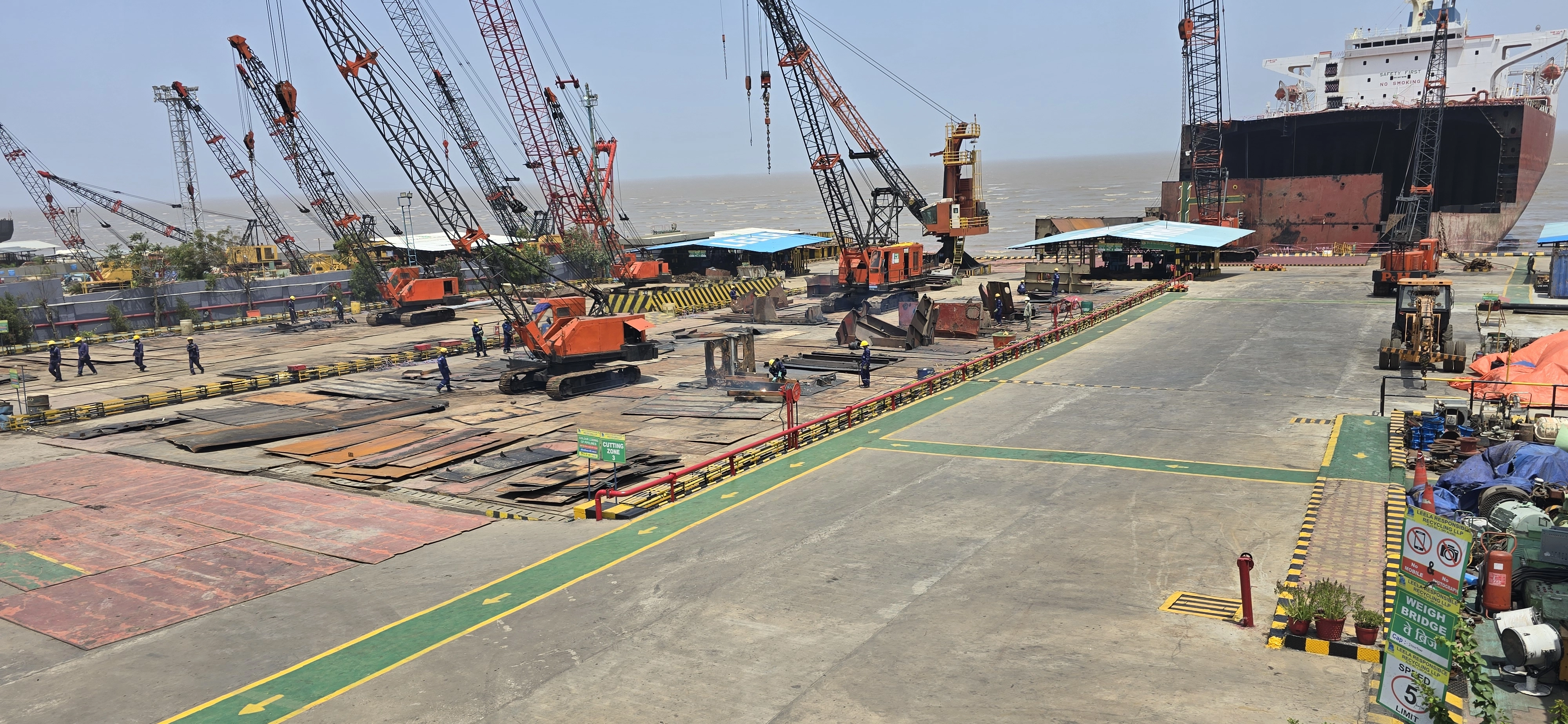
The updated picture in Alang is a good example. More than one hundred facilities have now achieved HKC-compliant status, but facility-level assessment still remains relevant when a particular ship is being placed for recycling.
Once the facility has been selected, the Ship Recycling Plan, or SRP, is prepared for the individual vessel.
This should not be confused with the Ship Recycling Facility Plan.
The Facility Plan deals with the recycling yard's overall systems and procedures. The Ship Recycling Plan deals with the ship that is actually going to be recycled.
It should reflect the vessel's IHM, structural characteristics and the proposed recycling process.
The plan also addresses matters such as safe-for-entry and safe-for-hot-work conditions and how the facility intends to deal with the hazardous materials identified on board.
In practice, this is another reason good technical information from the owner helps.
If the yard receives an accurate IHM, relevant vessel plans and clear information about the ship's condition, it has a better basis on which to prepare the recycling plan.
The SRP should look like a plan for that ship, not a standard document with a different vessel name on the front page.
The final survey takes place before recycling begins.
It brings together the work that has been done on the vessel and at the recycling facility.
Among other things, the survey verifies the relevant parts of the IHM, the approved Ship Recycling Plan and the authorisation of the selected recycling facility.
Once the applicable requirements have been satisfied, the International Ready for Recycling Certificate, or IRRC, can be issued by the Administration or under its authority.
Timing matters here.
The IRRC is intended for a vessel that is actually ready to proceed for recycling and its validity is limited. Owners therefore need to coordinate the survey and certificate with the expected delivery schedule.
Completing everything too late can create pressure around delivery. Starting the preparation early does not mean the certificate itself has to be issued months in advance. It means the underlying work is already under control when the final timing becomes clear.
GMS was closely involved in one of the earliest practical examples after the Convention entered into force.
In July 2025, the Liberian Registry issued the first IRRC following HKC entry into force to R PISCES. The vessel was scheduled for recycling at Leela Responsible Recycling in Alang, and GMS and SSORP supported the recycling documentation process.
The importance of that case was not simply that it was the first.
It showed how the process can work when the owner, flag Administration, technical teams, cash buyer and recycling facility coordinate from the beginning.
GMS reported that R PISCES was the first vessel worldwide to receive an IRRC after HKC entered into force.
A year after entry into force, GMS participated in a wider industry discussion looking at what had changed and what still needed attention.
One of the interesting points was how quickly the conversation had moved away from preparing for the Convention.
Owners were already looking at documentary compliance as part of the transaction. Yards that had invested in infrastructure before 2025 were dealing with a different challenge: maintaining those standards during everyday operations.
That distinction matters.
Getting a facility ready for an audit is one stage. Maintaining equipment, keeping procedures current, training new workers, managing hazardous materials correctly and recording waste movements year after year is a different task.
The first year has therefore been less about building the framework and more about making sure it works consistently.
The same applies to worker safety.
HKC has brought greater structure to PPE, hot-work controls, hazardous-material awareness, emergency planning and worker training.
But the effectiveness of those systems still depends on what happens on the ground.
GMS's discussions with worker representatives in Alang have reinforced the importance of practical training, including communication in languages workers understand and the use of demonstrations and visual material rather than relying only on written procedures.
Worker welfare also deserves continued attention beyond immediate workplace safety.
Medical care, occupational health, accommodation and long-term welfare should remain part of the industry's development as HKC matures.
Entry into force was an important milestone. It was never going to be the end of the work.
The decision to recycle a ship is still a commercial decision.
Freight markets, second-hand values, vessel age and condition, class requirements, steel prices, currencies, financing and the expected recycling value all affect the timing.
HKC does not change those fundamentals.
What it changes is the framework under which the vessel is prepared and recycled once that decision has been made.
From an owner's perspective, proper preparation can reduce uncertainty in the transaction.
A current IHM, a facility that has already been assessed and a clear understanding of the certification process mean fewer outstanding issues as the delivery date approaches.
The same applies to the commercial selection of the recycling market.
Price is important. It always will be.
But headline price per LDT is only one part of the transaction. Payment security, sanctions exposure, delivery risk, the capability of the recycling facility, documentation and the owner's own ESG requirements can also have a commercial impact.
We do not see responsible recycling and commercial value as competing objectives.
A well-prepared transaction should address both.
This is consistent with GMS's recent market commentary, which has continued to discuss freight, pricing, steel markets and currency conditions alongside HKC readiness and compliance.
The relationship between the Hong Kong Convention and the Basel Convention remains one of the more complicated areas for shipowners.
HKC was developed specifically for ships and ship recycling.
The Basel Convention deals with transboundary movements of hazardous wastes and their disposal.
A ship intended for recycling can create circumstances in which both frameworks become relevant.
Work has been under way between IMO and the Basel Convention bodies to provide practical guidance on how the two regimes should operate alongside one another. That work has continued after HKC entered into force and remains under consideration internationally.
GMS has consistently supported HKC as the dedicated international framework for ship recycling and has argued that the industry would benefit from greater clarity between the different regimes.
But owners need to work with the rules that exist today.
HKC compliance should not automatically be taken to mean that every Basel or national waste-shipment question has also been resolved.
The vessel's flag, location, planned voyage and the jurisdictions involved in the transaction all need to be considered.
Where there is uncertainty, it is better to identify it before the recycling voyage is fixed.
EU-flagged vessels have another consideration.
The EU Ship Recycling Regulation continues to apply alongside HKC and contains requirements that go beyond the Convention in some areas.
Most importantly for an owner recycling an EU-flagged vessel, the selected recycling facility must be on the current European List of Ship Recycling Facilities.
An HKC-authorised facility is therefore not automatically eligible to recycle every EU-flagged vessel.
The European List is updated, and facility status can change. The current list should be checked when the recycling decision is being made.
There has been some progress in reducing administrative duplication.
In 2026, the European Commission introduced updated certificate formats that can be used to satisfy relevant certification requirements under both the EU regime and HKC. This simplifies part of the process, but it does not remove the European List requirement.
For owners, the simple lesson is not to treat HKC, EU SRR and Basel as interchangeable.
They overlap in places, but they are not the same system.
Much of the regulatory work happens before the ship arrives for recycling.
That does not mean the owner's interest has to end when delivery takes place.
Depending on the company and the vessel, owners may want evidence of how recycling actually progresses.
This can include records relating to hazardous-material removal, worker-safety procedures, waste movements, significant incidents and completion of the recycling process.
This is particularly relevant for companies reporting on ESG commitments or making public statements about how their vessels are recycled.
A certificate demonstrates that certain requirements were satisfied at a particular stage.
Monitoring and completion records can provide a clearer picture of what happened to the individual vessel afterwards.
This is one area where specialist support can be useful.
Under the Sustainable Ship and Offshore Recycling Program, SSORP, owners come to us at different stages.
Sometimes the IHM is already in good order and support is mainly required around facility assessment, documentation and recycling supervision.
In other cases, the vessel is approaching recycling and gaps in the IHM or other documentation still need to be addressed before the final survey.
There is no single package that every vessel requires.
The work depends on the vessel, the owner, the flag, the chosen facility and how much preparation has already been completed.
The purpose is not to add another layer of paperwork. It is to make sure the different pieces come together before delivery instead of being dealt with separately at the last moment.
SSORP's existing GMS material describes this work as extending from IHM preparation and yard selection through supervision and post-recycling documentation.
Before the delivery schedule becomes firm, we would want the following questions answered.
Is the IHM current?
Part I should reflect the vessel as she exists today, and Parts II and III should be prepared as required for recycling.
Is the facility currently authorised and suitable for this vessel?
Check the authorisation itself, but also look at the facility's experience and systems.
Is the Ship Recycling Plan progressing?
Make sure the yard has the vessel information it needs and that the approval process and timing are understood.
Has the final survey been planned with the flag or recognised organisation?
Do not discover the documentary requirements only when delivery is approaching.
Does another regulatory regime apply?
Consider Basel-related requirements, national rules and EU SRR where relevant.
Is the IRRC timing consistent with the expected delivery?
The certificate has limited validity.
What does the owner want to receive after recycling?
Agree monitoring and final-reporting expectations before work begins.
None of these questions is particularly complicated by itself.
The difficulty comes when several of them are still unanswered at the same time.
The first year of the Hong Kong Convention has been encouraging.
A common international framework is now in force. Shipowners are paying more attention to end-of-life preparation. Major recycling countries have invested in compliant capacity, and facility standards have changed significantly compared with the industry of twenty years ago.
There is still work to do.
Implementation has to remain consistent. Worker safety and welfare need continued attention. The Basel overlap requires a workable long-term solution. The EU regime continues to operate separately in important areas. And owners increasingly want better evidence of what happens during and after recycling.
We should also begin looking further downstream.
A vessel can arrive at a recycling facility carrying an IMO number, an IHM, an approved recycling plan and a substantial compliance record. Thousands of tonnes of steel may then leave that facility and gradually lose their connection with the original ship.
This is why GMS has started looking more closely at ship-recycled steel traceability and the possibility of a Ship-Recycled Steel Passport.
That discussion sits beyond the minimum requirements of HKC, but it follows naturally from them.
The Convention has given the industry a much stronger framework for determining how a ship is recycled.
The next stage is improving our ability to demonstrate what happened during that process and, eventually, where the recovered material went.
For owners preparing a vessel today, the immediate approach is simpler.
Start early. Make sure the IHM is in order. Select the facility carefully. Understand which regulatory regimes apply. Coordinate the SRP, final survey and IRRC with the delivery schedule. And decide in advance what evidence you want once the recycling is complete.
When those points are handled properly, HKC should make the recycling process clearer, not more complicated.
Contact Us
Ship Recycling Team
Nayeem Noor is currently serving as the VP of Business Development at GMS, the world’s largest buyer of ships and offshore assets for recycling. An alumnus of the prestigious Indian Institute of Technology (IIT) Roorkee, Nayeem combines market intelligence with disciplined communication, helping counterparties align on timing, risk, and execution across shipping and offshore asset cycles.
Kiran Thorat is a trader at GMS and the Head of the India Office. He looks after sustainable ship recycling projects (an integral part of sustainable shipping and the circular economy). He holds a Bachelor's Degree from the Marine Engineering and Research Institute (MERI), India and a Master's Degree in Energy, Trade, and Finance from Cass Business School, London.
Contact Us
Ship Recycling Team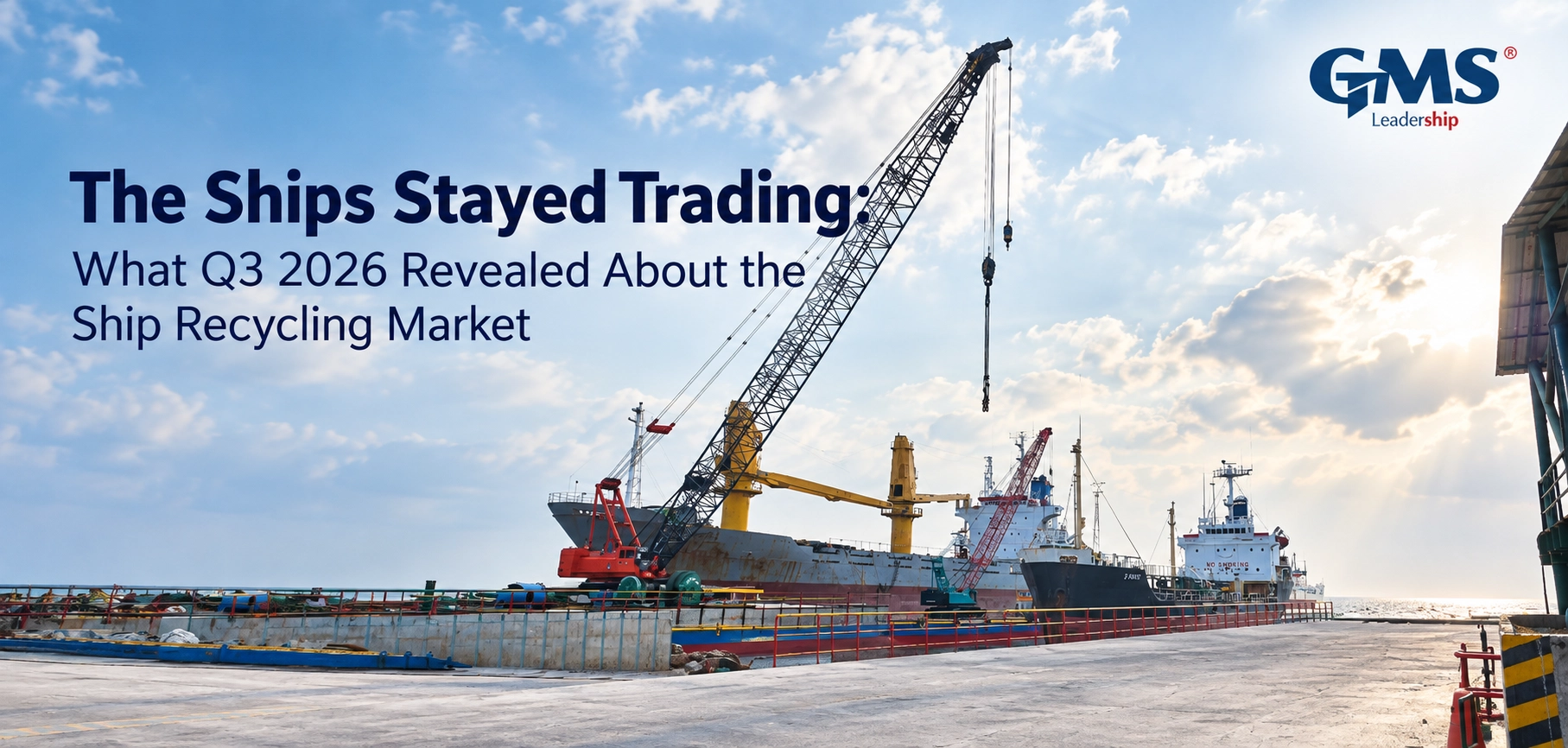
Strong freight, scarce recycling candidates and resilient subcontinent pricing defined Q3 2026. GMS team examines why ships stayed trading, how the major recycling markets responded, and why today's ...
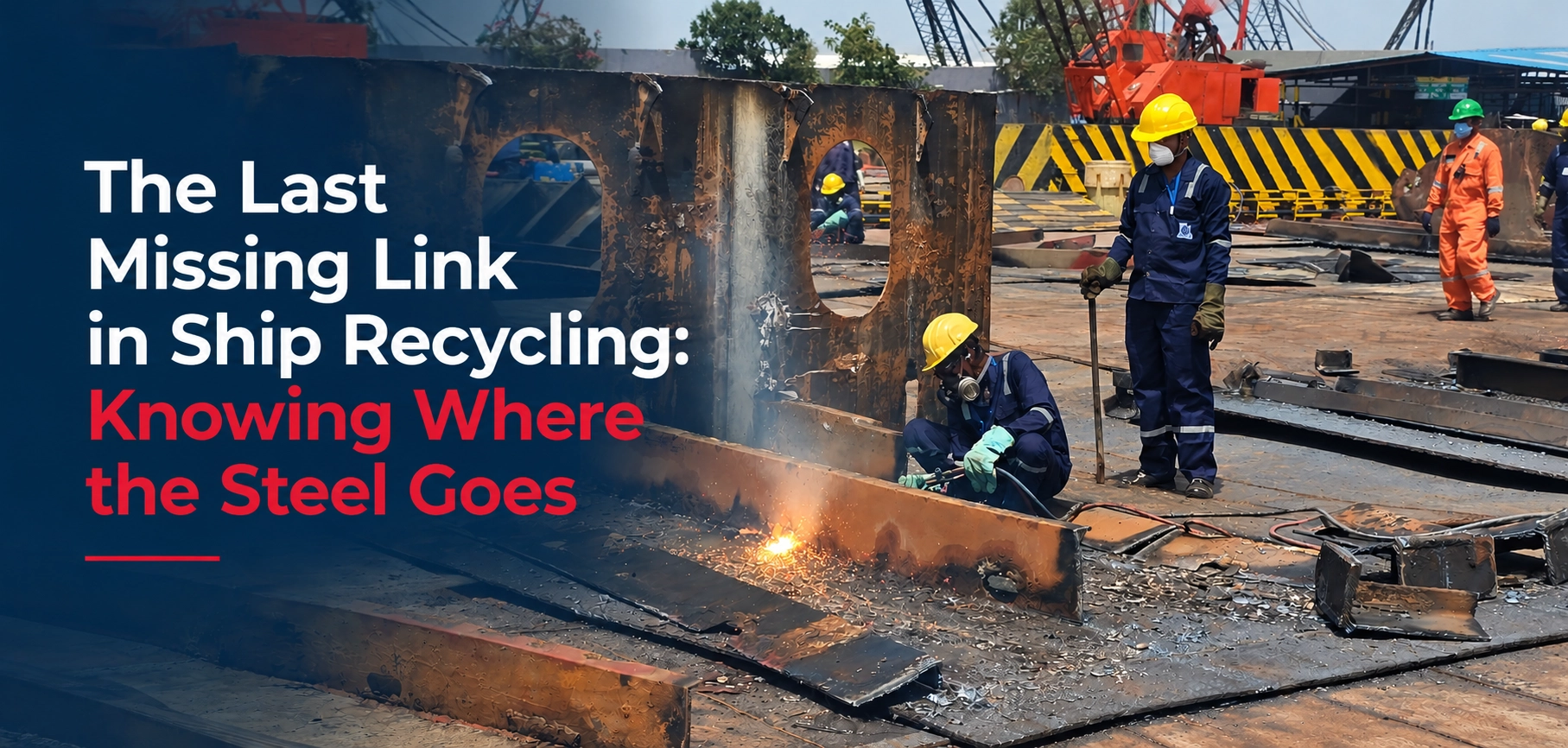
Ship recycling has developed sophisticated systems for tracing hazardous materials, but far less attention is given to tracing the steel recovered from a vessel. Dr. Anand Hiremath proposes exploring ...


Download GMS App