
02 Oct 2026
Strong freight, scarce recycling candidates and resilient subcontinent pricing defined Q3 2026. GMS team examines why ships stayed trading, how the major recycling markets responded, and why today's constrained supply may be building a larger recycling backlog further down the line.
At the beginning of Q3 2026, the ship recycling market appeared to be approaching a meaningful increase in supply. Hundreds of merchant vessels were preparing to move out of the Gulf, oil had fallen sharply from earlier highs, freight premiums were easing, and recycling yards across the major destinations had available capacity and buying appetite.
The expected wave did not arrive in the way many anticipated.
Instead, Q3 became a useful reminder of one of the most important dynamics in ship recycling: demand from recycling yards does not create vessel supply on its own. A ship becomes a serious recycling candidate only when the economics of continuing to trade, selling second-hand or retaining the asset become less attractive than the recycling alternative.
Throughout much of the quarter, that threshold was not reached.
At the start of July, GMS was tracking an estimated 550 merchant vessels preparing to exit the Gulf, including approximately 200 bulk carriers. The expectation was that at least part of the tonnage delayed by earlier disruption would gradually move towards recycling as trading conditions normalised.
By late September, recycling buyers were still looking for ships. Previously secured vessels continued arriving at Chattogram, Alang and Gadani, but fresh market sales had become increasingly difficult to replace. Tanker earnings had strengthened dramatically, dry freight remained healthy and second-hand alternatives remained open.
The quarter therefore ended with a market that had demand, but not enough willing sellers.
Ship recycling markets are often viewed through the relative pricing of Bangladesh, Pakistan, India and Turkey. That comparison remains important, but Q3 showed that it is only one part of the decision.
The more significant competition was frequently between the recycling value of an ageing vessel and the value of keeping that vessel employed.
Freight strengthened repeatedly during the quarter. By early September, the Baltic Dry Index had risen to 3,488, its strongest level since October 2021, with earnings across the dry sectors continuing to give older vessels a commercial reason to remain in service.
The same effect became even more pronounced in the tanker market towards the end of the quarter. By Week 39, GMS reported some VLCC employment exceeding USD 1 million per day. Whatever the exact circumstances of individual ships, the broader implication was clear: exceptionally strong earnings increase the opportunity cost of recycling.
This matters because recycling values can rise considerably without producing an immediate increase in vessel supply. The recycling market first has to overcome the value of the owner's alternatives.
Q3 repeatedly demonstrated that relationship.
The price movement across the quarter was significant.
In Week 27, GMS indications placed Bangladesh at the top of the market, with dry bulk values at USD 458–463/LDT and tanker values at USD 478–483/LDT. Pakistan followed at USD 443–448/LDT for dry bulk and USD 463–468/LDT for tankers, while India and Turkey remained lower.
By Week 39, Pakistan had moved to the top of the sub-continent board at approximately USD 510/LDT for dry bulk and USD 530/LDT for tankers. Bangladesh was close behind at USD 500/LDT and USD 520/LDT respectively, while India had strengthened to USD 465/LDT for dry bulk and USD 485/LDT for tankers. Turkey also improved within its own market, reaching USD 300/LDT for dry bulk and USD 310–315/LDT for tankers.
Those movements would normally be expected to make recycling progressively more attractive.
Yet the supply response remained limited.
This suggests that headline recycling value was only one threshold in the decision. Freight earnings, second-hand prices, voyage opportunities, route risk, compliance exposure and the expected remaining economic life of the vessel were all influencing whether an owner was prepared to exit.
For brokers and market participants, that distinction is important. A rising recycling board does not automatically imply a rising flow of recycling candidates.
Bangladesh began the quarter from a strong commercial position. Chattogram had buyer appetite, financing capacity and competitive pricing, but Q3 quickly demonstrated how operational conditions can interrupt even a favourable market setup.
Heavy rainfall and flooding across the Chattogram region moved beyond the normal seasonal inconvenience and directly affected yard operations and beaching activity.
As conditions improved towards the end of July, previously delayed vessels began moving through the beaching windows. Physical activity recovered, and the waterfront became progressively busier through September.
However, the underlying sales market did not recover at the same speed.
By Week 39, Chattogram was receiving and delivering previously secured tonnage, while end buyers were still struggling to replace those vessels with a consistent flow of fresh purchases. Demand had rebuilt, but supply had not responded sufficiently.
This became one of the more useful observations of the quarter.
A busy recycling waterfront does not necessarily indicate a strong fresh-sales market.
Arrivals and deliveries reflect transactions concluded earlier. For anyone trying to assess the direction of recycling supply, the more relevant question is whether new vessels are being committed fast enough to replenish the pipeline.
During much of Q3, they were not.
Pakistan experienced one of the most significant changes in competitive position during the quarter.
Gadani entered Q3 behind Bangladesh, but the combination of strong recycler appetite, local steel conditions, a relatively firm Rupee and an increasingly scarce pool of candidates gradually shifted the balance.
By Week 34, GMS indications had risen to USD 515–520/LDT for dry bulkers and USD 535–540/LDT for tankers, putting Pakistan at the top of the sub-continent market.
What made the move particularly interesting was that the price rise was occurring before sufficient tonnage had actually reached the waterfront. Recycling yards were effectively competing for a limited future supply of ships.
That competition pushed values higher until part of the immediate requirement was satisfied.
As previously purchased tonnage began arriving at Gadani in late August and September, the urgency reduced and pricing corrected from the peak. This did not mean the underlying demand had disappeared. It meant that the most aggressive buyers had covered part of their immediate requirement and no longer needed to bid as though every available vessel might be the last.
Pakistan still ended the quarter in the leading conventional pricing position.
The wider lesson is relevant beyond Gadani. When recycling yards have a strong requirement and candidate supply becomes sufficiently scarce, the value of the next available vessel can be determined as much by buyer urgency as by changes in local steel.
India produced perhaps the most interesting structural development during Q3.
On the conventional price board, Alang generally remained behind Pakistan and Bangladesh for standard bulkers and tankers.
Viewed only through those indications, India would appear to have spent much of the quarter in third position.
Actual activity told a more nuanced story.
Reefers, gas carriers, passenger vessels, green ships, non-ferrous-rich units and other specialist or compliance-sensitive vessels generated a different buying response. By Week 39, GMS was describing Alang as effectively operating two markets: one for conventional steel tonnage and another for vessels carrying additional specialist, compliance or non-ferrous value.
That distinction has practical implications for valuation.
A conventional market ranking does not necessarily show where a specific vessel will achieve its best commercial outcome. Vessel type, onboard materials, regulatory requirements and the capabilities of the available facilities may alter the competitive landscape considerably.
The quarter also brought an important regulatory development when two Indian recycling facilities were proposed for inclusion on the European List of Ship Recycling Facilities. The proposal remained pending at quarter-end, although international shipping associations later expressed support for the additions.
If the range of facilities able to compete for particular regulated vessels continues to expand, the traditional comparison based mainly on country-level price boards may become progressively less useful for certain categories of tonnage.
Q3 also reinforced the extent to which compliance now influences the commercial recycling decision.
Sanctions exposure, ownership histories, registries and previous trading activity all became relevant when assessing whether a vessel represented an executable opportunity. By late August, the market was dealing with an already limited supply of ships while also recognising that not every available candidate could be handled by every destination without additional compliance considerations.
Bangladesh's serious safety incident during August and the subsequent investigation brought operational procedures, gas testing and supervision back into focus.
At the same time, HKC implementation continued across the major recycling destinations.
These developments should not be viewed separately from price.
Compliance affects the number of realistic buyers, the choice of facilities, the time required to complete a transaction and, ultimately, the value that can actually be realised.
A higher headline offer is only commercially meaningful if the transaction can be completed within the regulatory, sanctions, operational and delivery requirements applying to the vessel.
For that reason, compliance is increasingly becoming part of price discovery rather than a separate consideration added after the commercial terms have been agreed.
Turkey remained significantly below South Asian pricing during Q3, but direct comparison alone does not explain Aliaga's market position.
Its recycling business continued to depend more heavily on geography, European regulatory access, specialist vessels and Basel-compliant trades than on matching the conventional pricing available in Pakistan, Bangladesh or India.
GMS indications improved during September as seasonal appetite returned, but the fundamental position did not change.
Turkey was competing for a different part of the market.
That provides another useful reminder: there is no single global ship recycling market in which every destination competes equally for every vessel.
Different vessel histories, flags, locations, regulatory requirements and physical characteristics can produce different realistic buyer pools. In some cases, the highest conventional price board may be less relevant than the number of facilities actually able and willing to complete the transaction.
The strongest lesson from Q3 may be that the recycling decision cannot be understood from recycling prices alone.
The relevant comparison is broader:
recycling value versus the value of the remaining alternatives.
If the vessel can continue earning attractive freight, recycling has to compete with those earnings.
If a second-hand buyer exists, recycling has to compete with the resale market.
If the ship has specialist value or particular regulatory requirements, the realistic recycling buyer pool may differ significantly from the standard market ranking.
If delivery requires additional routing, insurance or compliance work, the headline price may not represent the final economic result.
This is why the timing of the decision matters as much as the nominal recycling price.
Q3 produced several examples of recycling buyers improving their bids without generating the expected increase in candidate supply. The missing part of the equation was not always demand at the recycling yards. It was deterioration in the alternatives available to the owner.
That deterioration did not occur consistently enough.
The imbalance that defined Q3 is likely to continue into Q4. Freight markets remain exceptionally strong across several shipping segments, while lucrative employment opportunities associated with the Strait of Hormuz continue to give ageing vessels a compelling reason to remain in service.
As long as those earnings remain available, recycling supply is likely to stay stretched. The opportunity cost of withdrawing a vessel from trading remains high, particularly when continued employment can generate returns that outweigh the immediate attraction of even a strong recycling price.
This does not mean that recycling supply has disappeared. It is increasingly being deferred.
Every vessel that remains trading beyond the point at which it might otherwise have been considered for recycling adds to a potential backlog of tonnage further down the line. If freight earnings eventually normalise, second-hand liquidity weakens or employment opportunities narrow, part of that deferred supply could return to the recycling market within a much shorter period.
In the meantime, limited availability is likely to remain supportive for recycling prices.
Pakistan, Bangladesh and India enter Q4 after a prolonged period in which fresh candidates have remained scarce relative to underlying yard appetite. Against this backdrop, supply-starved recycling markets across the subcontinent are expected to continue performing firmly across the board, supported by traditional year-end positivity in local markets.
Local steel prices, currency movements and mill demand will continue to influence the level at which recyclers can bid, but the continuing shortage of available ships should keep competition strong when attractive candidates emerge.
Q4 is therefore likely to continue the unusual combination of constrained recycling supply and resilient recycling values.
Strong freight markets are postponing some recycling decisions, but in doing so they may also be increasing the volume of ageing tonnage that will eventually need to exit.
The immediate market remains supply-starved. The longer-term recycling pipeline may be moving in the opposite direction.
The quarter did not end with weak recycling demand.
It ended with strong recycling demand competing against a shipping market that continued to give owners alternatives.
Bangladesh rebuilt buyer appetite after severe operational disruption.
Pakistan demonstrated how sharply prices could respond when strong yard demand met a shortage of available vessels.
India continued to develop a specialist market that was not fully visible in the conventional pricing board.
Turkey retained its separate regulatory and geographic role.
Across all four markets, however, the central constraint remained remarkably consistent: not enough ships were being released for recycling.
The traditional approach to analysing ship recycling begins at the beach. It asks what yards are paying, where local steel is moving and which destination ranks first.
Q3 suggests that the more important analysis may begin one step earlier.
The critical question is not only what a vessel is worth for recycling today, but what is being given up by recycling it rather than continuing to trade, sell or redeploy it.
During Q3 2026, that opportunity cost remained high enough to keep a significant amount of ageing tonnage in service.
That does not remove those vessels from the recycling equation. In many cases, it simply postpones the decision. If the exceptional earnings environment eventually eases, the tonnage retained in service during 2026 could become part of a larger recycling backlog waiting to enter the market.
The recycling yards were ready to buy.
The ships, for the most part, still had somewhere else to go.
Contact Us
Ship Recycling Team
Mr. Jamie Dalzell graduated from Durham University with a BA in History (Hons) and worked for a brokering house before joining GMS. As a seasoned veteran trader, he has been with GMS for over 11 years, working at the GMS offices in the USA, Dubai, and Shanghai, and is currently based in Singapore. He was one of the first traders working at GMS and has since then successfully concluded more than 500 S&P deals since 2009, with many of the world's major shipowners in all recycling locations (including Turkey). Jamie has also been one of the main contributors and authors of the widely read and distributed GMS weekly recycling report for over the past 24 years, and is also frequently quoted and interviewed in various other mainstream shipping media publications.
Nayeem Noor serves as Vice President - Business Development at GMS, the world’s largest buyer of ships and offshore assets for recycling. An alumnus of the Indian Institute of Technology (IIT) Roorkee, Nayeem combines market intelligence with disciplined communication, helping counterparties align on timing, risk, and execution across shipping and offshore asset cycles. With extensive exposure to global maritime markets, he contributes to industry dialogue on shipping trends, asset values, market cycles, regulation and the evolving economics of the maritime sector. His perspectives are regularly sought in industry discussions, and he has contributed to maritime publications and thought-leadership initiatives, including chapters in the book 'Shipping and Shipbuilding: The Engines of India’s Economy'.
Nayeem also contributes to GMS’s market intelligence and industry commentary through articles, podcasts and strategic analysis, translating complex commercial and regulatory developments into clear, practical perspectives for the maritime community. He serves as Committee Chair of the Ship Recycling Committee for Nor-Shipping 2027, further contributing to international dialogue around the future of the maritime asset lifecycle.
Contact Us
Ship Recycling Team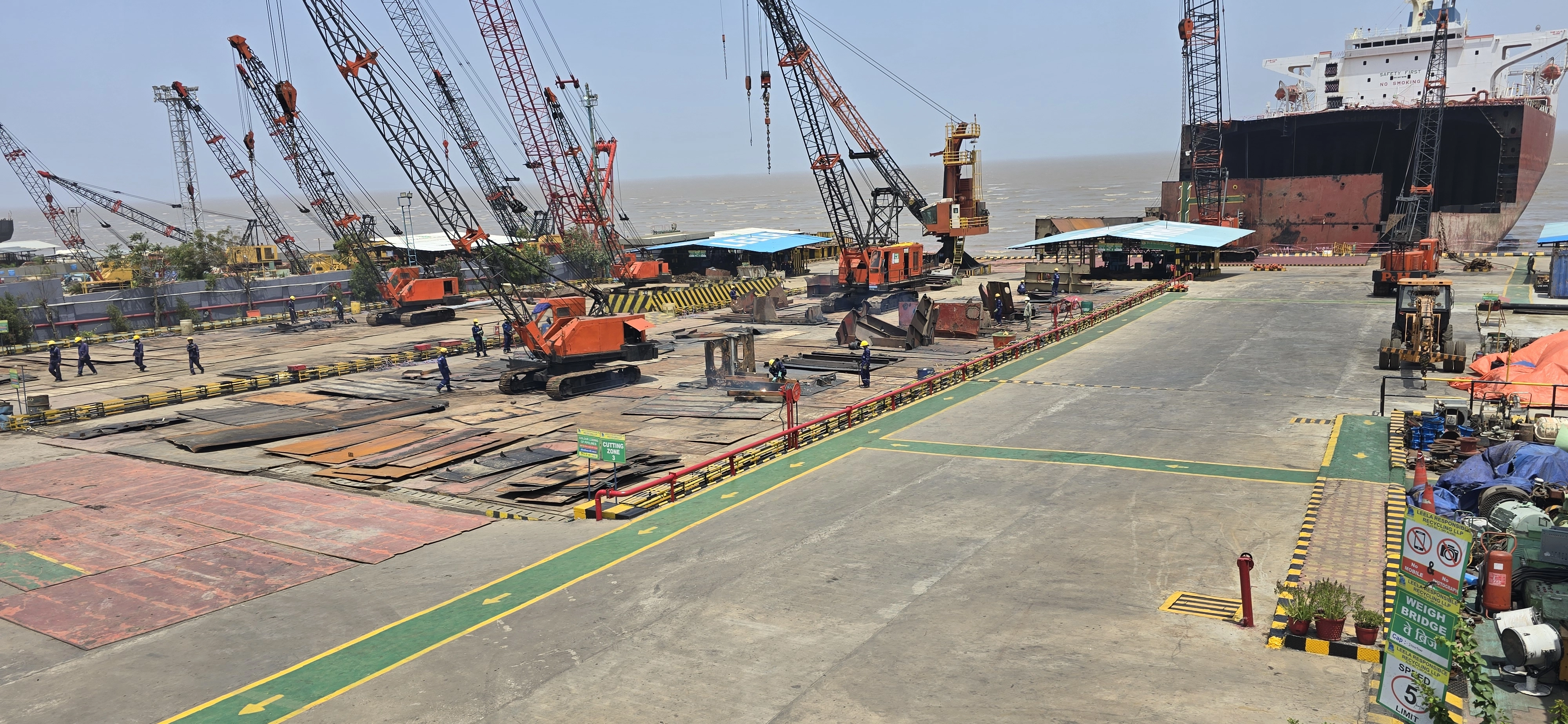
The Hong Kong Convention has now been in force for more than a year.
Before 26 June 2025, much of the industry's attention was on when the Convention would enter into force, whether recycling ...
Alang has long been a cornerstone of India’s ship recycling industry, contributing significantly to the country’s steel ecosystem and circular economy. Over the years, the sector has made ...


Download GMS App