07 May 2026
The recent decision to recycle the 1998-built chemical tanker NQ Zinnia in Denmark should be welcomed as a responsible end-of-life step. But it also gives the wider ship recycling industry a useful opening to ask a question that is often avoided.
What actually happens to the steel after a ship is recycled?
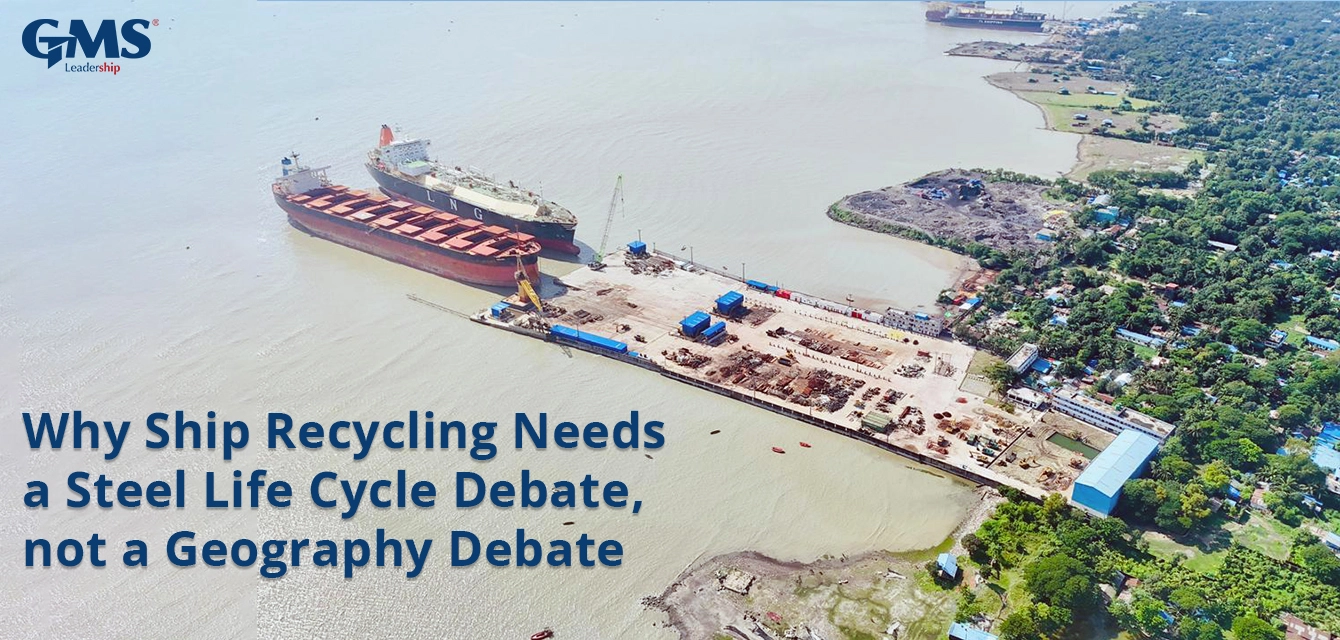
That question matters because ship recycling is still too often judged by where it happens and how the vessel is positioned for dismantling. Beaching or non-beaching. Europe or South Asia. Developed or developing economies. These labels dominate the debate, yet they tell us very little about the final environmental outcome.
A ship at the end of its trading life is not simply waste. It is a large industrial asset containing thousands of tonnes of recoverable material. The environmental value of recycling lies not only in cutting the ship safely, but in how much material returns to productive use, how much energy is saved, how hazardous substances are controlled, and how much carbon is avoided through reuse or lower-energy processing.
The industry cannot claim circularity while leaving the journey of its most valuable material largely invisible.
For years, sustainable ship recycling has been judged too heavily by method. Non-beaching is often assumed to be better by default, while beaching is still judged through old images and past practices. That is too simple for an industry that has changed significantly.
Method matters, but it is not the whole answer. A recycling facility should be judged by the controls it has in place and the results it delivers. That means engineered containment, trained workers, documented procedures, hazardous material systems, independent audits, and measurable recovery of materials.
This is why the NQ Zinnia can become more than a recycling transaction. It can become a useful steel life cycle case study.
A clearer view of its recovered steel would allow the industry to examine the material journey in practical terms. How much steel was recovered? How much was reused directly? How much was re-rolled? How much was remelted? Where did the steel go? How far did it travel? What emissions were linked to processing and transport? How were hazardous materials identified, removed, stored, treated, and disposed of?
These are the questions that determine environmental performance. They are also the questions that rarely receive enough public attention.
Such transparency would not challenge Denmark. It would strengthen the global debate.
The distinction between reuse, re-rolling, and remelting is central to the environmental value of ship recycling.
If recovered ship steel is remelted, it remains recycling, but it carries a different energy and emissions profile. If the same steel can be re-rolled or reused with lower energy input, the climate benefit may be higher. This distinction is often missed when ship recycling is judged only by geography.
The NQ Zinnia is a practical case for examining this issue. As a chemical tanker, it is not the simplest vessel type to recycle. Such ships may involve cargo residues, coatings, tank-cleaning considerations, and hazardous material controls that require careful documentation. A visible life cycle view could show how these issues were managed and what environmental result was achieved.
A credible steel life cycle review would not need to be complex. It should show total steel recovered, the share reused, re-rolled and remelted, transport distance to downstream users, energy consumed in processing, estimated carbon impact, hazardous waste quantities, and disposal routes. Independent verification of material flows would make the exercise more credible.
This would give shipowners, regulators, recyclers, insurers, steel buyers, and maritime stakeholders a better basis for comparison.
A more evidence-based discussion is especially relevant when looking at the progress made by HKC-compliant yards in India.
If we take the case of Alang, it has moved from controversy to compliance, with more than 110 yards certified under the HKC framework, representing about 7 million gross tonnes of annual capacity, or roughly 4.5 million light displacement tonnes.
This scale matters. The global fleet cannot be responsibly recycled through limited capacity alone. The industry needs compliant recycling options that can manage real volumes while maintaining worker safety, environmental controls, and commercial viability.
The circular economy case deserves closer attention. Around 75% of hull steel in Alang is reused through re-rolling instead of melting, saving about 58% of the energy required for primary steelmaking and avoiding roughly 1.6 tonnes of carbon dioxide per tonne of steel.
That should not be treated as a footnote. It should sit at the centre of any serious environmental comparison.
In many Western recycling models, recovered steel is more commonly routed into scrap melting streams, while South Asian recycling has historically maintained stronger pathways for reuse, repair, resale, and re-rolling. This does not mean one model should escape scrutiny. It means both should be assessed through comparable outcomes.
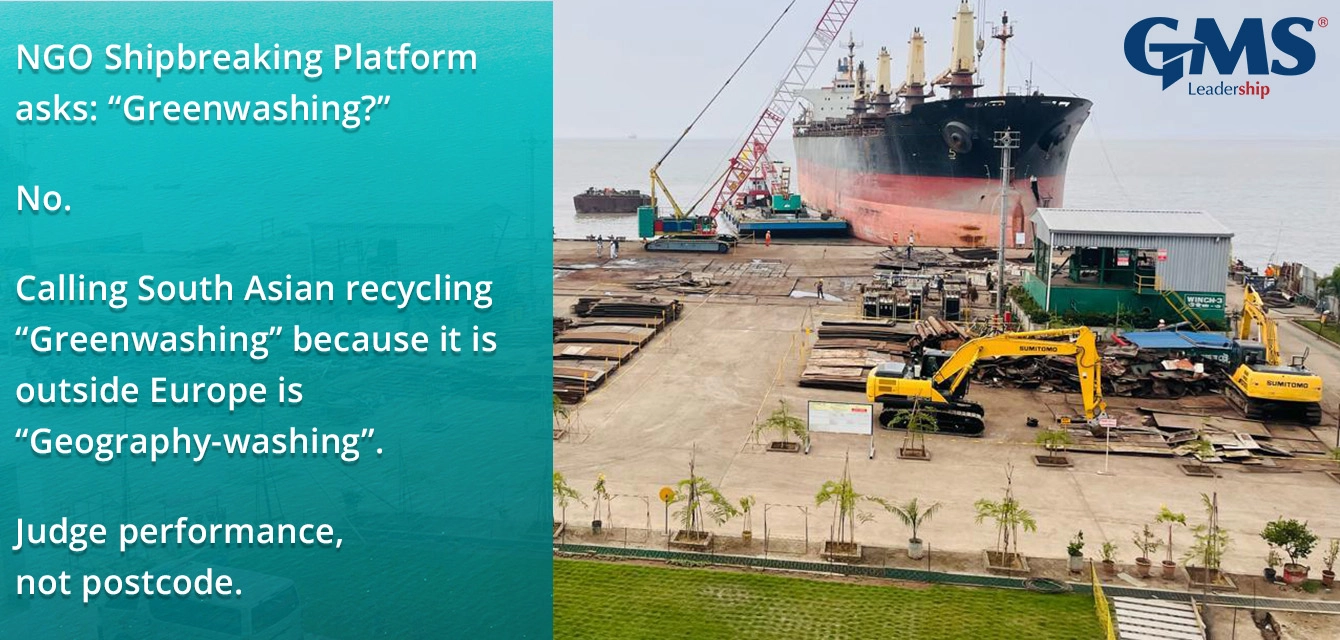
There is also a perception gap that the industry needs to confront. European yards are often perceived as environmentally preferable because of geography and method. South Asian yards are still sometimes judged through outdated assumptions. Neither position is good enough. If a Danish yard delivers strong material outcomes, the data will show it. If HKC-compliant Indian yards deliver strong outcomes through scale, re-rolling, reuse, and audited controls, that should also be recognised.
India’s compliant yards have also invested in physical environmental controls. Impermeable flooring at HKC-compliant Indian recycling facilities is typically built as a multi-layer structure using gravel, sand, plain cement concrete, and reinforced cement concrete, with thickness generally between 60 cm and 100 cm. In several yards, geomembranes provide an added layer of protection, while drainage systems are designed to capture oil, bilge water, chemicals, paint chips, rust particles, and other residues.
These details matter because compliant beaching yards should be judged by the controls they apply, not by assumptions carried over from the past.
A Ship Recycling Steel Life Cycle Report could help move the discussion forward. It would not replace HKC compliance. It would add another layer by showing the environmental value created after a vessel reaches the yard.
The NQ Zinnia can start that conversation. Can the life cycle of its recovered steel be made visible?
If yes, the industry gains a useful reference point. The debate then becomes more practical: which facilities can combine safe operations, hazardous material control, verified compliance, material reuse, low-carbon recovery, and scalable capacity?
That answer may be more complex than many assume. It will also be far more useful than the debate we have today.
Contact Us
Ship Recycling Team
Dr. Anand Hiremath is a leading voice in sustainable ship recycling, with a strong foundation in civil and environmental engineering and more than a decade of specialised expertise in safe and environmentally sound ship recycling.
He holds a master’s degree in Environmental Engineering from IIT Guwahati and earned his PhD from IIT Bombay, where his pioneering research on the Integrated Risk Assessment Framework for Best Practices in Ship Recycling contributed to advancing safety, environmental responsibility, and structured risk management within the industry.
As Chief Executive Officer of the Sustainable Ship and Offshore Recycling Program (SSORP), Dr. Hiremath plays a key role in strengthening responsible ship recycling practices across the sector. He works closely with recycling yards to support compliance with the Hong Kong Convention (HKC) for the safe and environmentally sound recycling of ships. Under his leadership, SSORP has overseen more than 100 Inventory of Hazardous Materials (IHM) surveys and successfully supported the recycling of over 130 end-of-life vessels.
His commitment to worker safety and practical capacity-building is reflected in more than 800 free safety awareness sessions conducted at recycling yards across the Indian subcontinent, benefiting over 13,000 workers. These initiatives have helped improve awareness, hazard recognition, and safe work practices at the yard level.
Beyond his operational leadership, Dr. Hiremath contributes to the development of the next generation of ship recycling professionals as Course Director for the Lloyd’s Maritime Academy Ship Recycling course in London. His global influence extends through his involvement in major international research and improvement initiatives, including the EU-funded DIVEST project and the Green Alang Initiative, both focused on improving environmental standards and sustainability in ship recycling.
Dr. Hiremath’s work has been published in leading international scientific journals, reinforcing his position as a thought leader in the field. He is also the author of The Green Handbook: A Practical Checklist to Monitor the Safe and Environmentally Sound Recycling of Ships, a practical industry resource for monitoring responsible ship recycling practices.
His professional credentials include Lead Auditor certifications for ISO 45001 and ISO 9001, certification as a Hazmat expert, Social Auditor, Responsible Steel Auditor, and sustainability practitioner.
With his combination of technical expertise, field experience, academic contribution, and commitment to worker safety and environmental protection, Dr. Anand Hiremath remains at the forefront of the global movement toward safer, greener, and more sustainable ship recycling.
Contact Us
Ship Recycling Team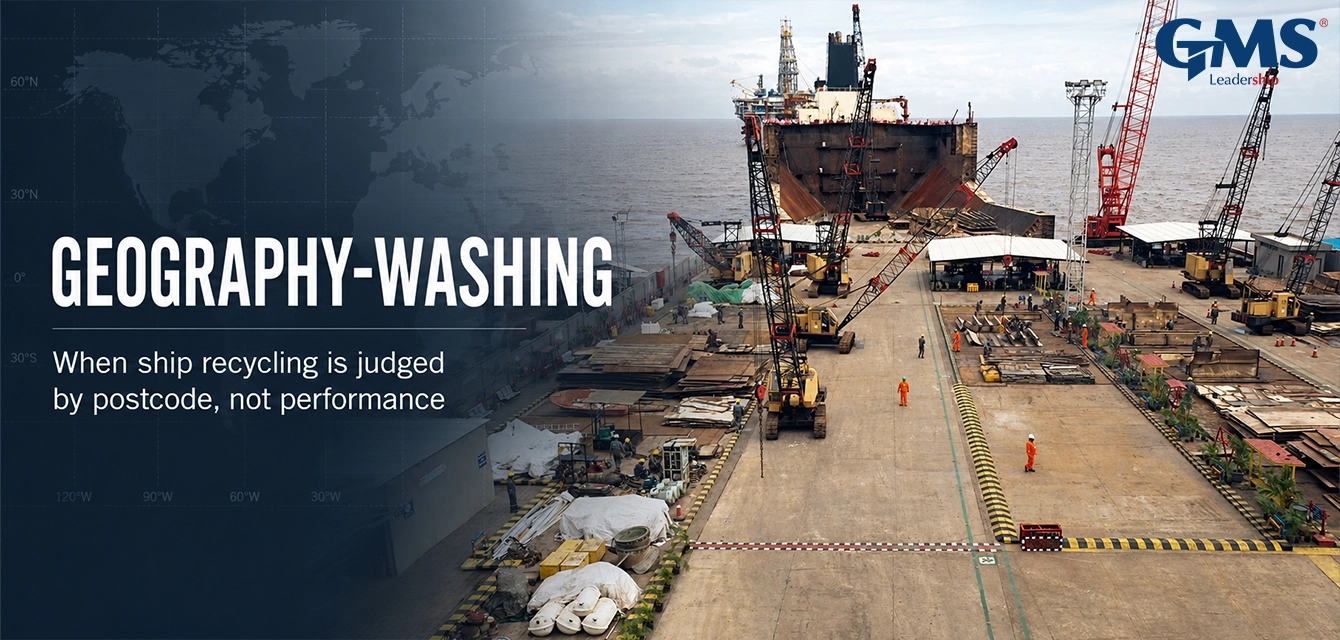
There is a certain comfort in consistency, and the NGO Shipbreaking Platform offers it in abundance. Whatever the question, ...
This article is part of an ongoing public exchange between NGO Shipbreaking Platform and GMS on ship recycling, circularity and ...


Download GMS App