05 May 2026
A Counter-Perspective on the EU Circular Economy Act, True Circularity, and Where Ship Recycling Actually Makes Economic and Environmental Sense
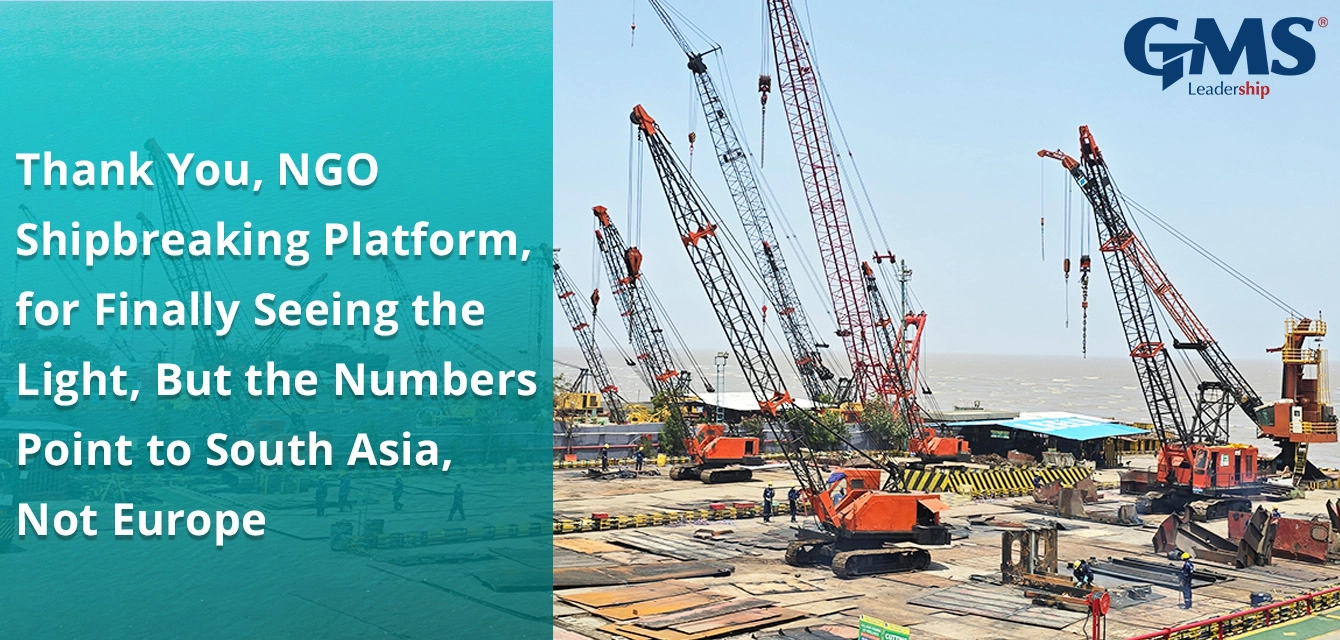
In a remarkable, if perhaps unintentional, moment of clarity, the NGO Shipbreaking Platform's latest press release on the EU Circular Economy Act has done something the ship recycling industry has long waited for. It has acknowledged, in black and white, that ship recycling is a clear example of the circular economy and a meaningful contributor to decarbonisation.
For that, the industry says: Thank you.
But having finally accepted the principle, the Platform immediately stumbles on the geography. Its conclusion, that ship recycling must migrate to European yards, reveals a fundamental misreading of steel economics, carbon logistics, and where circular value is actually maximised. The industry welcomes the Platform's recognition. It cannot, however, follow it into an argument that would make the circular economy less efficient, more carbon-intensive, and economically questionable.
Before Europe drafts ambitious policy frameworks and calls for investment in new recycling capacity, it is worth pausing to acknowledge what South Asia has already built. India, Bangladesh, and Pakistan together account for the overwhelming majority of global ship recycling volume, and they have been doing so for generations.
India alone has handled end-of-life vessels representing nearly 69 million tonnes of recoverable steel over decades, primarily through Alang in Gujarat, the world's largest ship recycling facility. This is not a cottage industry. It is a mature, large-scale secondary steel supply chain that has quietly supported the region's construction, infrastructure, and manufacturing sectors for decades.
The re-rolling mills clustered around Alang, Chittagong, and Gadani form one of the world's most active secondary steel processing ecosystems, consuming ship plate and converting it directly into rebar, sections, and flat products that are building South Asia's cities and bridges.
This is the circular economy, not as a policy aspiration, but as a lived industrial reality, demonstrated at tens of millions of tonnes of scale over fifty years.
The Platform's vision of ship-derived scrap flowing into European steelmaking rests on a flawed premise: that Europe has the demand to absorb it. It does not, at least not at the scale that would justify redirecting the global fleet.
Europe is not a steel-hungry, scrap-deficit economy. It is, in fact, a major exporter of steel scrap. The EU regularly exports millions of tonnes of ferrous scrap annually to destinations including Turkey, India, Egypt, and beyond. That is not a sign of an economy desperate for secondary raw materials. It is the signature of a region with more scrap than it can consume domestically.
The countries with genuine, structural, fast-growing demand for steel are India, Bangladesh, and Pakistan. India's steel consumption is widely expected to grow strongly over the coming decades as it industrialises and urbanises at pace. Bangladesh's construction boom and infrastructure expansion require vast quantities of rebar and structural steel.
These are economies where ship-derived scrap does not need to travel through an export chain. It moves directly from the beach into a nearby re-rolling mill and emerges as the material building a hospital, a school, or a highway.
Routing end-of-life ships to European yards and then exporting the resulting scrap to South Asia, where the demand actually sits, does not close a loop. It creates a new and unnecessary one.
The Platform's own figures are worth revisiting: recycled ship steel avoids up to 1.5 tonnes of CO₂ per tonne compared with primary production, uses 72% less energy, and cuts air pollution by 86%. These are compelling numbers. They are also numbers that apply wherever responsible ship recycling takes place, in Alang, in Chittagong, or in a European dry dock.
What the Platform fails to account for is the carbon cost of rerouting vessels away from their natural end-of-life trajectories toward European facilities. A ship trading its final voyages in Asian waters, destined organically for a South Asian yard, does not sail to Northern Europe without burning significant quantities of bunker fuel. That additional voyage, potentially thousands of miles, carries a real and measurable carbon cost that must be set against any theoretical benefit of European recycling.
And then, if the resulting scrap steel has no sufficient European home, it is exported, again by ship, back to the markets where demand is highest: India, Bangladesh, Pakistan. The result is a carbon-intensive, multi-leg maritime journey replacing what would otherwise be a short, direct path from ship to mill.
True circularity is about minimising energy expenditure in the loop, not increasing the length of it. Sending ships to South Asia, where both the recycling capacity and the steel demand are co-located, may offer a lower-carbon pathway when assessed across the full value chain.
None of this is to argue that working conditions, environmental management, and worker safety at South Asian yards are above scrutiny. They are not. The industry has its challenges, and continuous improvement is non-negotiable. But the answer to those challenges is not to abandon South Asia as a recycling destination. It is to invest in, certify, and incentivise compliant operations within it.
Yards operating under the Hong Kong International Convention framework, or under national regulatory regimes with genuine enforcement, can be capable of responsible ship recycling when certification is supported by monitoring, enforcement, and continuous improvement. Alang's better yards today bear little resemblance to the Alang of thirty years ago. The trajectory is one of improvement, and that improvement is best accelerated by engagement.
The EU should use its regulatory leverage to require that EU-beneficial-owner vessels go to certified yards wherever they are located, rather than treating European geography as a proxy for responsibility.
Europe's re-flagging loophole is real and should be closed. But closing it means ensuring ships go to certified, compliant facilities. It does not mean those facilities must be European.
The NGO Shipbreaking Platform has done the world a service by quantifying what the ship recycling industry has long known: this is a high-value, carbon-saving, strategically important circular economy sector. For that acknowledgement, the industry is genuinely grateful.
But circularity is not a geographic preference. It is an economic and environmental logic, and that logic points clearly to South Asia, where the steel is needed, the capacity exists, the demand is real, and the re-rolling mills are ready. Sixty-nine million tonnes of recoverable steel handled in India alone is not a footnote. It is a headline.
The world needs more responsible ship recycling, not less of it, and not a version of it redesigned around European industrial interests. The material flow already shows where the demand sits. Policy should follow the carbon, not the compass.
Contact Us
Ship Recycling Team
Dr. Anand Hiremath is a leading voice in sustainable ship recycling, with a strong foundation in civil and environmental engineering and more than a decade of specialised expertise in safe and environmentally sound ship recycling.
He holds a master’s degree in Environmental Engineering from IIT Guwahati and earned his PhD from IIT Bombay, where his pioneering research on the Integrated Risk Assessment Framework for Best Practices in Ship Recycling contributed to advancing safety, environmental responsibility, and structured risk management within the industry.
As Chief Executive Officer of the Sustainable Ship and Offshore Recycling Program (SSORP), Dr. Hiremath plays a key role in strengthening responsible ship recycling practices across the sector. He works closely with recycling yards to support compliance with the Hong Kong Convention (HKC) for the safe and environmentally sound recycling of ships. Under his leadership, SSORP has overseen more than 100 Inventory of Hazardous Materials (IHM) surveys and successfully supported the recycling of over 130 end-of-life vessels.
His commitment to worker safety and practical capacity-building is reflected in more than 800 free safety awareness sessions conducted at recycling yards across the Indian subcontinent, benefiting over 13,000 workers. These initiatives have helped improve awareness, hazard recognition, and safe work practices at the yard level.
Beyond his operational leadership, Dr. Hiremath contributes to the development of the next generation of ship recycling professionals as Course Director for the Lloyd’s Maritime Academy Ship Recycling course in London. His global influence extends through his involvement in major international research and improvement initiatives, including the EU-funded DIVEST project and the Green Alang Initiative, both focused on improving environmental standards and sustainability in ship recycling.
Dr. Hiremath’s work has been published in leading international scientific journals, reinforcing his position as a thought leader in the field. He is also the author of The Green Handbook: A Practical Checklist to Monitor the Safe and Environmentally Sound Recycling of Ships, a practical industry resource for monitoring responsible ship recycling practices.
His professional credentials include Lead Auditor certifications for ISO 45001 and ISO 9001, certification as a Hazmat expert, Social Auditor, Responsible Steel Auditor, and sustainability practitioner.
With his combination of technical expertise, field experience, academic contribution, and commitment to worker safety and environmental protection, Dr. Anand Hiremath remains at the forefront of the global movement toward safer, greener, and more sustainable ship recycling.
Contact Us
Ship Recycling Team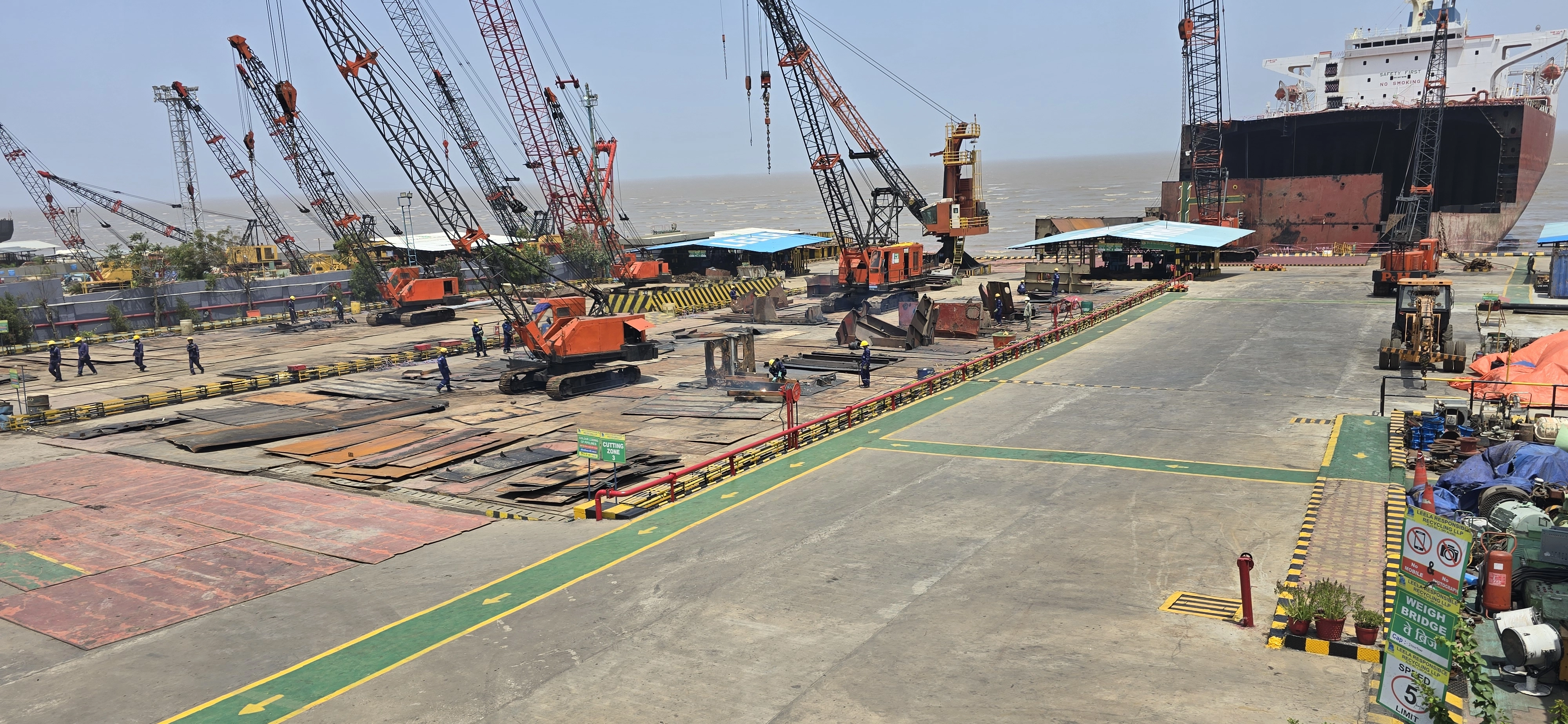
The Hong Kong Convention has now been in force for more than a year.
Before 26 June 2025, much of the industry's attention was on when the Convention would enter into force, whether recycling ...
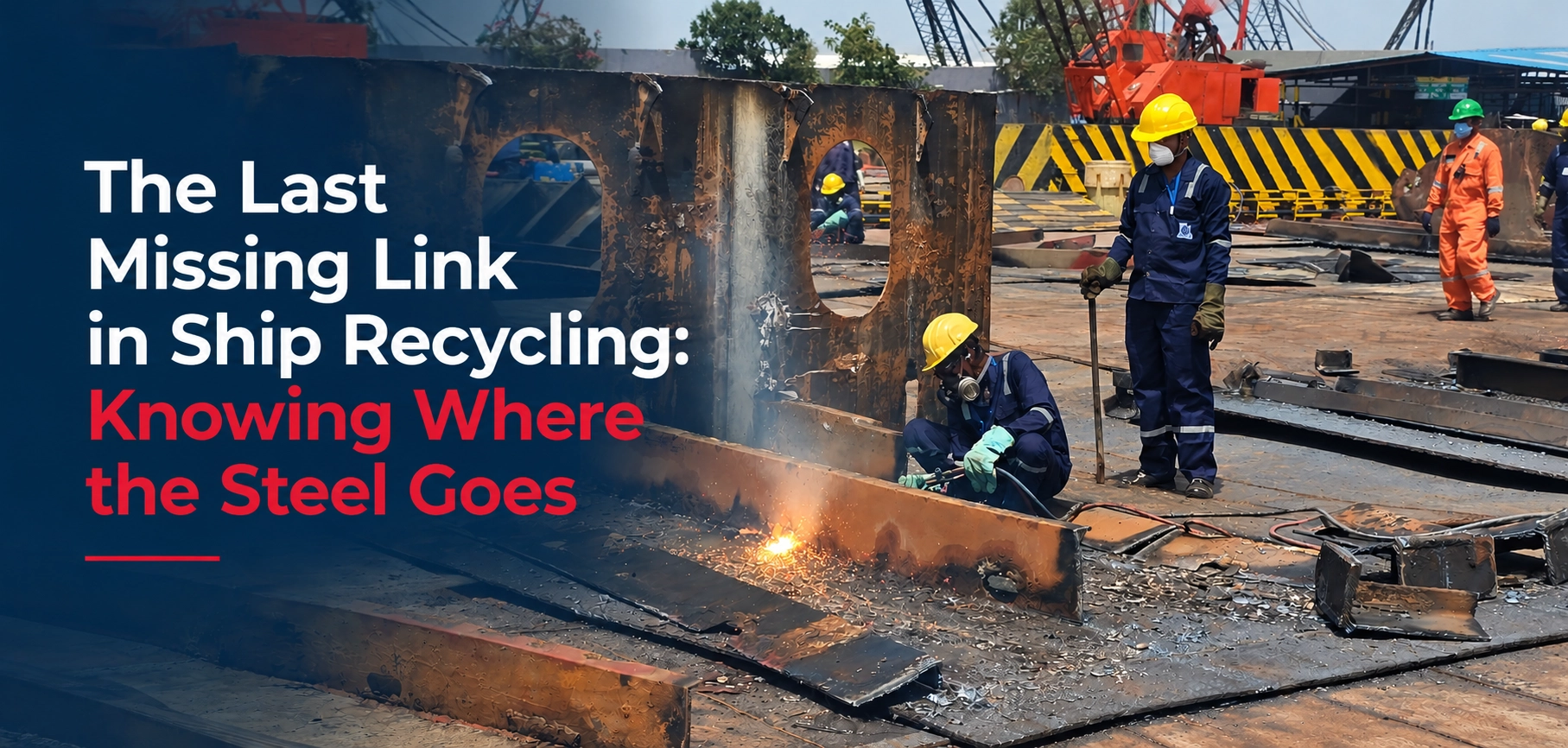
Ship recycling has developed sophisticated systems for tracing hazardous materials, but far less attention is given to tracing the steel recovered from a vessel. Dr. Anand Hiremath proposes exploring ...


Download GMS App