01 May 2026
Alang has long been a cornerstone of India’s ship recycling industry, contributing significantly to the country’s steel ecosystem and circular economy. Over the years, the sector has made steady progress, with several yards aligning themselves with the Hong Kong International Convention for the Safe and Environmentally Sound Recycling of Ships.
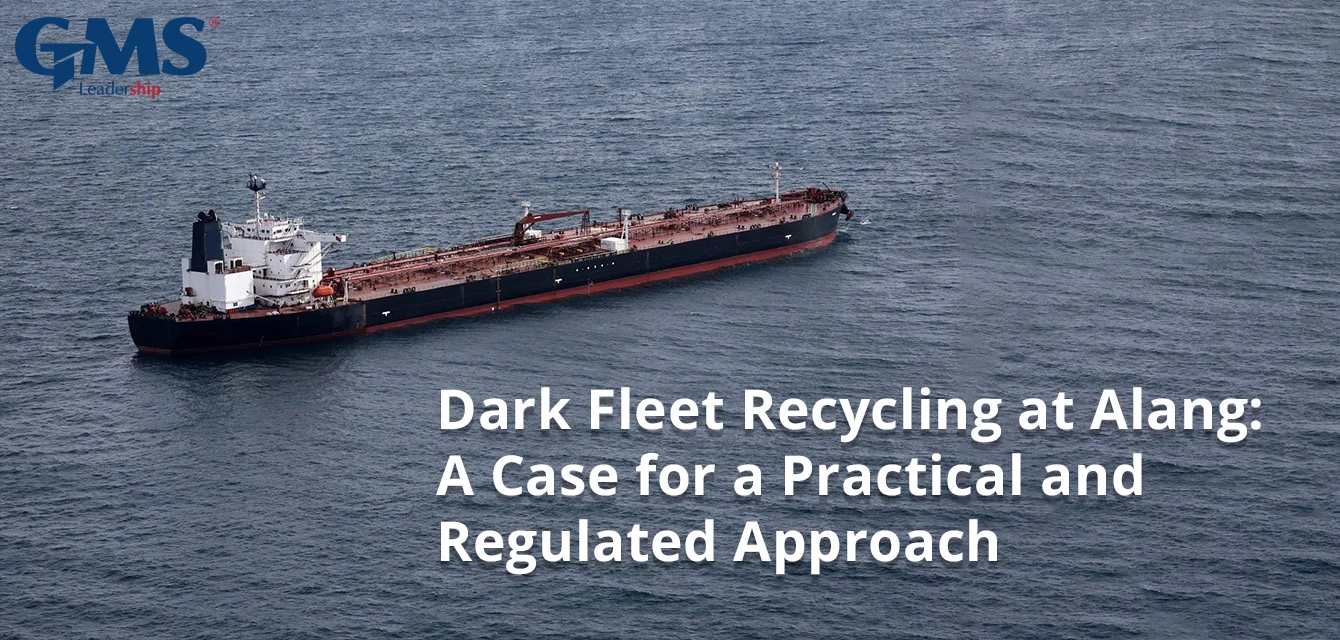
Today, the industry is facing a new and complex situation. A growing number of vessels operating under opaque ownership structures or sanctions regimes are approaching the end of their lifecycle. Their arrival at recycling destinations like Alang is raising questions across the value chain.
From a recycling yard’s perspective, however, the starting point remains straightforward. A vessel at end-of-life is, ultimately, scrap. The concern is not whether it is labelled as part of a “dark fleet” or otherwise. The real issue is whether the yard has the necessary information and regulatory clarity to recycle it safely, compliantly and without future exposure.
Safe recycling depends on planning, and planning depends on reliable information.
In several cases involving such vessels, key documentation is either incomplete or unavailable. The absence of an Inventory of Hazardous Materials (IHM) means that hazardous substances such as asbestos, polychlorinated biphenyls and heavy metals cannot be properly identified and managed.
Similarly, when an International Ready for Recycling Certificate (IRRC) is not provided, it raises concerns about whether the vessel has followed the required compliance process under the Hong Kong Convention.
The lack of vessel plans and supporting technical documentation makes it difficult to prepare a comprehensive Ship Recycling Plan. Without clarity on structural arrangements, tank configurations or residual materials, operational risks increase.
Material Safety Data Sheets (MSDS), when missing, further limit the ability to assess and manage hazardous or flammable substances during dismantling.
These gaps do not just affect safety on the ground. They also create compliance uncertainty for the yard itself. In an environment where regulatory scrutiny is increasing, the risk of retrospective action or reputational impact cannot be ignored.
For many recyclers, this is the more immediate concern. Accepting a vessel without full clarity may expose them to future regulatory consequences or affect their standing with global shipowners.
Alongside operational challenges, there are clear commercial pressures shaping behaviour in the market.
It is important to note that acquisition dynamics for such vessels are not always straightforward. While the purchase price of these vessels may, in some cases, be lower than that of fully compliant tonnage, the cost of documentation, verification and regulatory handling remains the same. In certain situations, it can even be higher due to additional scrutiny and uncertainty.
Despite this, a parallel market dynamic is beginning to emerge.
Some yards are willing to engage with such vessels under less structured conditions, while others remain cautious due to compliance and reputational considerations. This creates uneven competition within the industry.
Responsible recyclers who have invested in compliance and systems aligned with the Hong Kong Convention find themselves in a difficult position. They must balance commercial viability with long-term credibility and regulatory alignment.
Over time, such conditions can influence scrap steel pricing and market behaviour within Alang. Variations in acquisition strategies and risk assumptions begin to reflect in the broader pricing environment, affecting all participants.
This is not an issue that can be addressed at the yard level alone.
Shipowners, cash buyers, financial institutions and regulators all influence how vessels move into the recycling ecosystem. When documentation is incomplete or regulatory pathways are unclear, the burden often shifts to the recycler.
At the same time, the role of government is critical. As India positions itself as a leader in compliant ship recycling, consistent monitoring and clear regulatory direction become essential.
There is also a need for better alignment between sanctions regimes, financial systems and ship recycling regulations. Without this alignment, uncertainty will continue to create grey areas.
Given the scale of ageing vessels in this segment, it is not realistic to assume that they can be excluded entirely from the recycling market.
A more practical approach is required.
There is a strong case for establishing a clear and strictly regulated legal channel through which such vessels can be brought into the recycling system. This would allow them to be dismantled in a controlled, safe and environmentally responsible manner, rather than remaining in operation indefinitely or moving through informal routes.
Such a framework should ensure that:
Vessels are accepted only after proper regulatory review and approval
Missing documentation, particularly the Inventory of Hazardous Materials, is addressed through independent assessment before recycling begins
Recycling is carried out only at yards that meet established safety and compliance standards
Clear guidelines are provided to all stakeholders, including financial institutions and cash buyers
This approach is not about lowering standards. It is about applying them consistently in a way that reflects current market realities.
Alang’s role in India’s industrial and maritime landscape remains significant. The progress made in recent years has strengthened its position globally.
The emergence of vessels from the dark fleet is a new phase that requires a measured response.
Treating these vessels purely as a compliance problem does not address the underlying issue. At the same time, accepting them without structure creates risks for both the industry and regulators.
The way forward lies in pragmatism.
By creating a clear legal pathway, supported by strong oversight and industry-wide participation, it is possible to ensure that such vessels are removed from global trade and recycled in a safer and more environmentally responsible manner.
For the industry, the priority is clarity. For regulators, it is consistency. And for all stakeholders, it is a shared responsibility to ensure that progress made over the years is not compromised.
Contact Us
Ship Recycling Team
Dr. Anand Hiremath is a leading voice in sustainable ship recycling, with a strong foundation in civil and environmental engineering and more than a decade of specialised expertise in safe and environmentally sound ship recycling.
He holds a master’s degree in Environmental Engineering from IIT Guwahati and earned his PhD from IIT Bombay, where his pioneering research on the Integrated Risk Assessment Framework for Best Practices in Ship Recycling contributed to advancing safety, environmental responsibility, and structured risk management within the industry.
As Chief Executive Officer of the Sustainable Ship and Offshore Recycling Program (SSORP), Dr. Hiremath plays a key role in strengthening responsible ship recycling practices across the sector. He works closely with recycling yards to support compliance with the Hong Kong Convention (HKC) for the safe and environmentally sound recycling of ships. Under his leadership, SSORP has overseen more than 100 Inventory of Hazardous Materials (IHM) surveys and successfully supported the recycling of over 130 end-of-life vessels.
His commitment to worker safety and practical capacity-building is reflected in more than 800 free safety awareness sessions conducted at recycling yards across the Indian subcontinent, benefiting over 13,000 workers. These initiatives have helped improve awareness, hazard recognition, and safe work practices at the yard level.
Beyond his operational leadership, Dr. Hiremath contributes to the development of the next generation of ship recycling professionals as Course Director for the Lloyd’s Maritime Academy Ship Recycling course in London. His global influence extends through his involvement in major international research and improvement initiatives, including the EU-funded DIVEST project and the Green Alang Initiative, both focused on improving environmental standards and sustainability in ship recycling.
Dr. Hiremath’s work has been published in leading international scientific journals, reinforcing his position as a thought leader in the field. He is also the author of The Green Handbook: A Practical Checklist to Monitor the Safe and Environmentally Sound Recycling of Ships, a practical industry resource for monitoring responsible ship recycling practices.
His professional credentials include Lead Auditor certifications for ISO 45001 and ISO 9001, certification as a Hazmat expert, Social Auditor, Responsible Steel Auditor, and sustainability practitioner.
With his combination of technical expertise, field experience, academic contribution, and commitment to worker safety and environmental protection, Dr. Anand Hiremath remains at the forefront of the global movement toward safer, greener, and more sustainable ship recycling.
Contact Us
Ship Recycling Team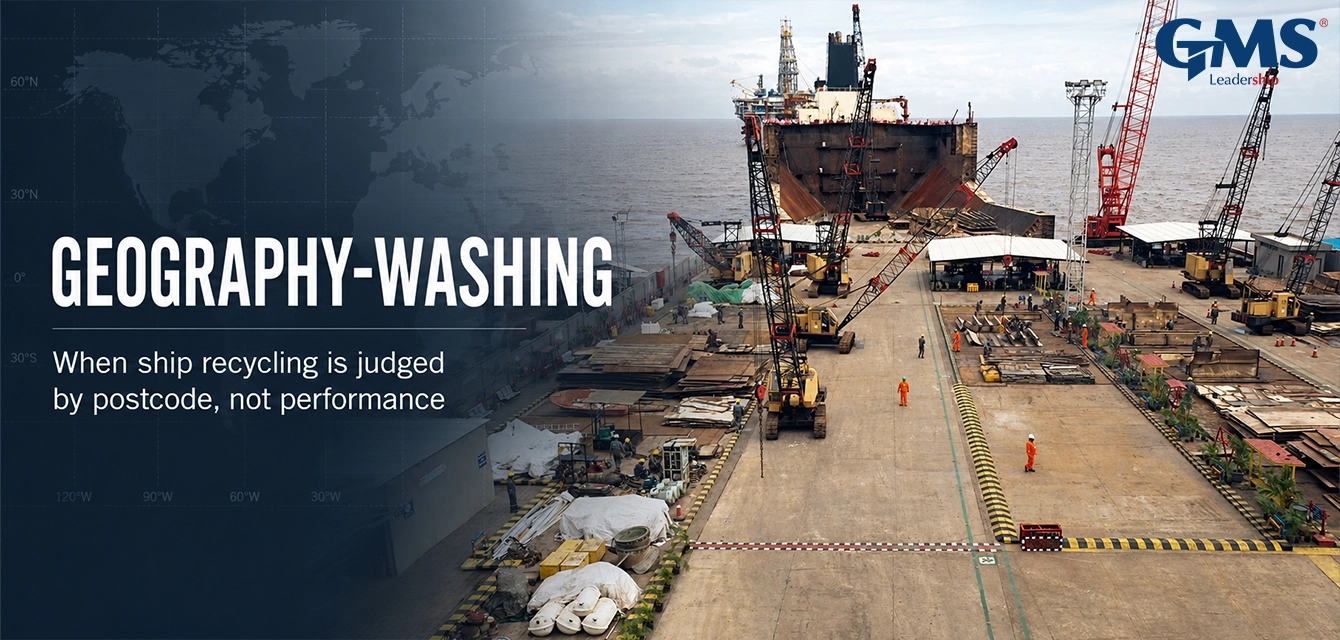
There is a certain comfort in consistency, and the NGO Shipbreaking Platform offers it in abundance. Whatever the question, ...
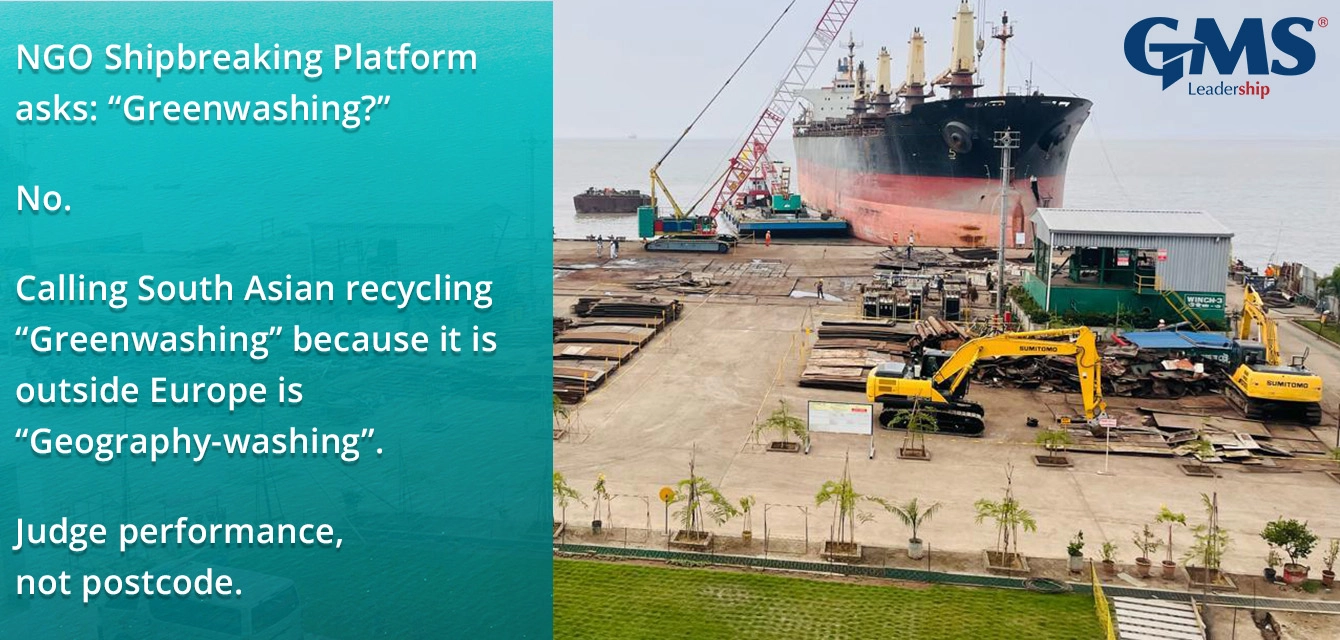
This article is part of an ongoing public exchange between NGO Shipbreaking Platform and GMS on ship recycling, circularity and ...


Download GMS App