29 Apr 2026




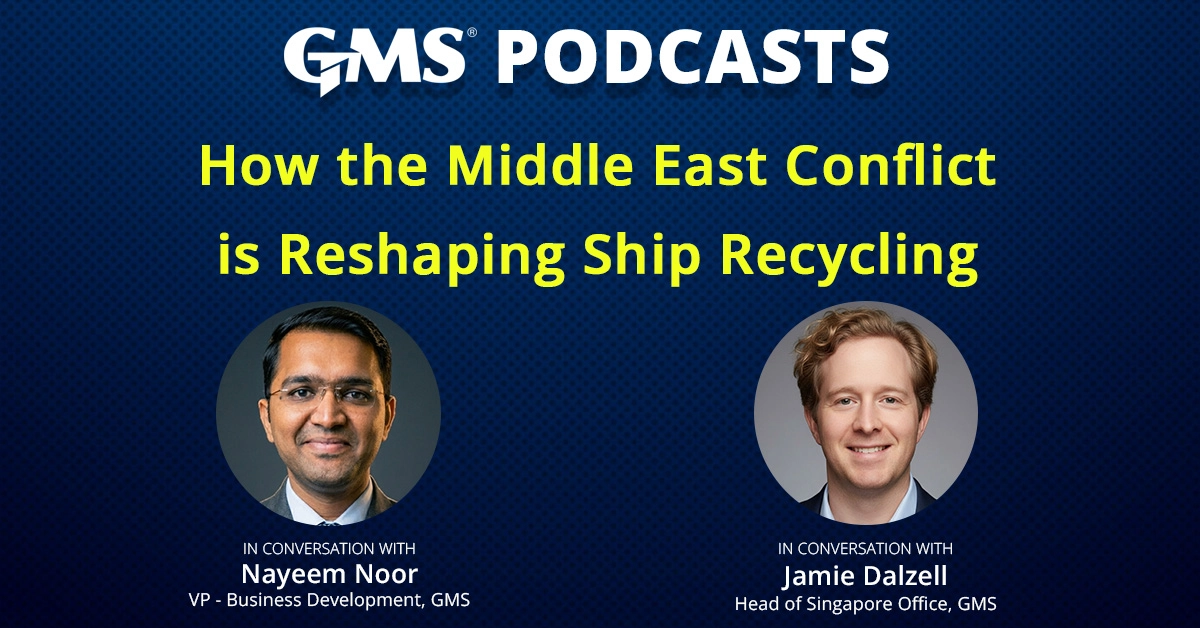
In this episode of GMS Podcasts, Jamie Dalzell, Head of GMS Singapore, speaks with Nayeem Noor, VP of Business Development at GMS, about how the ongoing Iran war is shaping current shipping and recycling market behaviour.
The starting point is a simple question. Why has disruption not translated into recycling supply?
Historically, periods of geopolitical instability have led to an increase in vessels being sold for recycling. Ships become harder to trade, earnings weaken, and owners look to exit. That pattern is not being seen at present.
Instead, the market is moving in a different direction. Freight has remained firm, trading routes have become longer, and risk premiums have increased. These factors are supporting earnings, even for older vessels. As long as the commercial case holds, owners are choosing to continue trading rather than commit to recycling.
The discussion highlights how this is creating a holding pattern in the market. The recycling sector is not short of demand. Yards are open, buyers are active, and capacity is available. What is missing is supply. The vessels are still trading, still earning, and not being released.
This dynamic is visible across all major recycling destinations. Alang continues to offer a strong compliance platform. Bangladesh has appetite but remains short of available tonnage. Pakistan benefits from regional positioning but still faces execution challenges. Turkey remains limited to more specialised segments.
A key takeaway is that supply has not disappeared. It has been delayed. Owners are effectively deferring recycling decisions as long as market conditions support continued operations.
The episode also looks ahead at what may change this balance. If freight softens, operating costs increase, or survey and maintenance requirements become harder to justify, the recycling decision could return quickly. At the same time, vessels affected by the conflict, whether damaged, detained or commercially impaired, may enter the recycling stream later, bringing a different set of operational and compliance considerations.
This is not a weak recycling market in the traditional sense. It is a market waiting for supply to return.
Why the Iran war is not increasing recycling supply
How freight strength is extending vessel life
The gap between expected and actual recycling activity
Owner decision making in current market conditions
The concept of delayed supply in ship recycling
Regional dynamics across Alang, Bangladesh, Pakistan and Turkey
Pricing hesitation between buyers and sellers
Potential impact of damaged or disrupted vessels
What could trigger a return of recycling supply


Download GMS App