15 May 2026




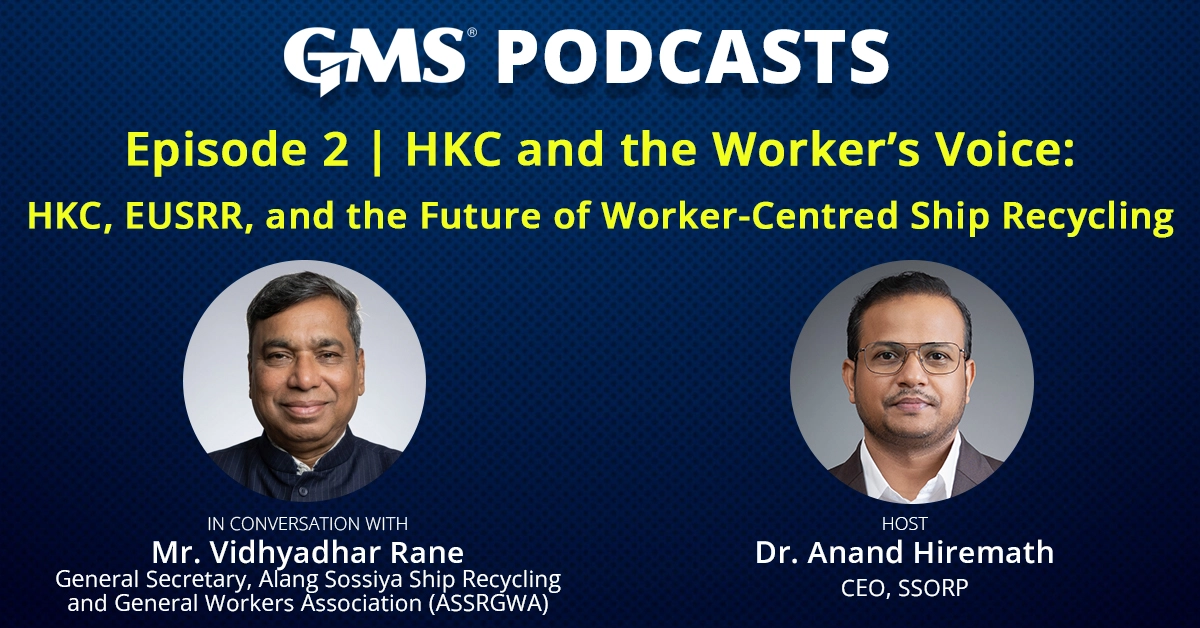
In this episode of GMS Podcasts, Dr. Anand Hiremath, CEO of the Sustainable Ship and Offshore Recycling Program, continues his conversation with Mr. Vidhyadhar Rane, General Secretary of the Alang Sosiya Ship Recycling & General Workers Association, about HKC, EUSRR, and the future of worker-centred ship recycling in Alang.
The discussion focuses on the EU Ship Recycling Regulation from the worker’s perspective. Mr. Rane explains that workers support high standards, stronger safety systems, environmental protection, training, and responsible recycling. However, he also highlights concern that Indian ship recycling yards, especially in Alang, have made major progress but have not received approval under the EU list.
Alang is not only an industrial location. It supports a large workforce and a wider local economy. More than 50,000 direct and indirect workers depend on ship recycling in Alang, including yard workers, transport workers, re-rolling mill workers, scrap handlers, service providers, small businesses, and families. From the worker’s point of view, international recognition matters because it supports livelihoods, stability, and confidence in responsible ship recycling.
The episode also explains why the Hong Kong Convention is seen as a practical global framework for safe and environmentally sound ship recycling. HKC creates responsibilities for shipowners, recycling yards, flag States, recycling States, and other stakeholders. It allows improvements to take place where ship recycling is actually happening, while supporting better safety, training, environmental controls, and worker welfare.
With more than 110 HKC-compliant yards in Alang, the conversation highlights how the industry has changed through investment in infrastructure, impermeable flooring, drainage systems, equipment, documentation, emergency preparedness, hazardous material handling, and worker training. Mr. Rane explains that workers are not asking for lower standards. They support high standards, but they also want genuine progress to be judged fairly.
A key focus of this episode is how HKC can keep evolving for the benefit of workers. The discussion covers stronger worker participation in yard-level safety meetings, more practical training, local-language communication, visual demonstrations, refresher training, better communication between workers and supervisors, and greater recognition of ship recycling workers’ skills.
The conversation also explores why recognition matters. When responsible shipowners send vessels to compliant yards, the industry remains active and workers benefit from steady employment, safer systems, and greater dignity. For workers, responsible ship recycling means safe work, proper training, fair recognition, and respect for their contribution to steel recovery, recycling, and the circular economy.
This episode is useful for shipowners, recyclers, cash buyers, regulators, maritime lawyers, maritime sustainability professionals, ESG teams, compliance officers, unions, circular economy stakeholders, and anyone following HKC implementation, EUSRR, Indian ship recycling yards, Alang workers, and responsible ship recycling in India.
Key Topics Covered
What the EU Ship Recycling Regulation means from a worker perspective
Why workers support high standards in ship recycling
The impact of non-approval of Indian yards under the EU list
Why fair recognition matters for HKC-compliant ship recycling yards in Alang
How more than 110 HKC-compliant yards have changed India’s ship recycling industry
The role of more than 50,000 direct and indirect workers in Alang’s recycling ecosystem
Why HKC is seen as a practical global framework for responsible ship recycling
How worker participation can improve yard-level safety discussions
The importance of local-language and visual safety training
Why refresher training helps strengthen safety awareness
The role of supervisors in improving worker communication and safety outcomes
Recognition of ship recycling workers’ skills, dignity, and contribution
How responsible ship recycling supports steel recovery and the circular economy
The future of Alang under HKC implementation
Why responsible ship recycling must protect workers, livelihoods, and compliance standards


Download GMS App