09 May 2026




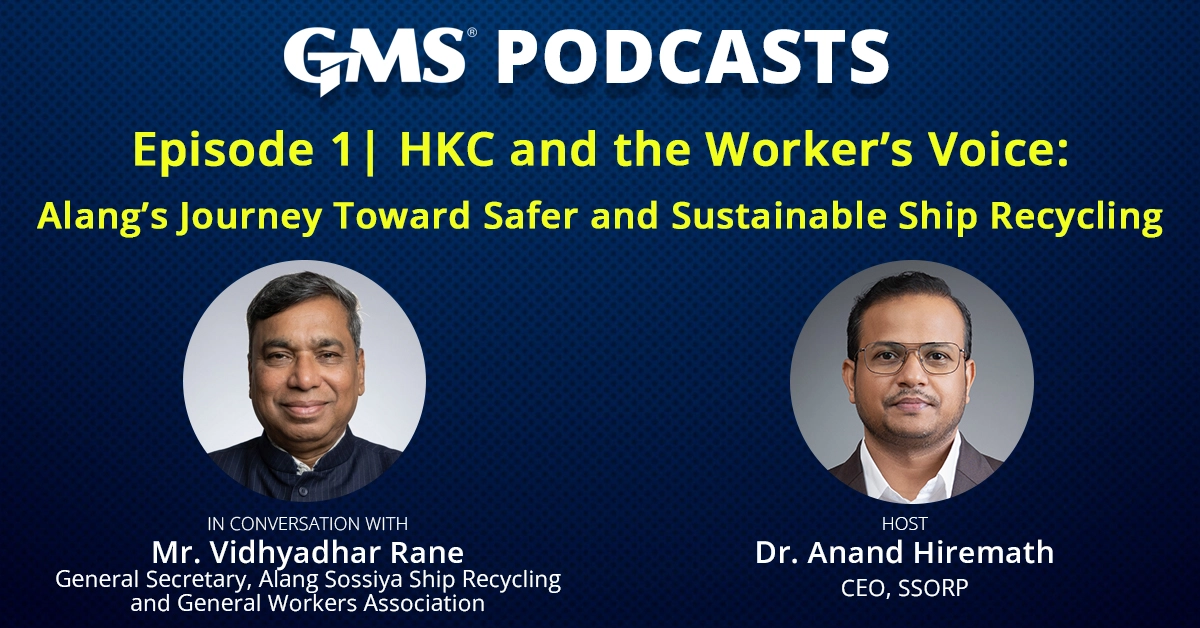
In this episode of GMS Podcasts, Dr. Anand Hiremath, CEO of the Sustainable Ship and Offshore Recycling Program, speaks with Mr. Vidhyadhar Rane, General Secretary of the Alang Sosiya Ship Recycling & General Workers’ Association, about what the Hong Kong Convention means for workers in Alang.
The discussion focuses on ship recycling from the worker’s perspective. Alang has been part of the global ship recycling industry for decades, and the sector has changed significantly through investment, training, infrastructure upgrades, safety systems, compliance processes, and stronger worker engagement.
A key theme of this episode is that Alang’s progress did not begin only with HKC. Yard owners have already invested heavily in infrastructure, impermeable flooring, drainage systems, equipment, documentation, training areas, emergency preparedness, and environmental controls. Today, more than 110 yards in Alang are HKC-compliant, reflecting a major shift in how safer and more sustainable ship recycling is being implemented on the ground.
The conversation explains how HKC has helped bring more structure to worker safety, PPE use, safe work procedures, hot work safety, hazardous material awareness, emergency response, and daily supervision. For workers, this has made safety more consistent, more visible, and more closely connected to the work itself.
The episode also highlights the importance of training in local languages for Alang’s migrant workforce. Since workers come from different Indian states and speak different languages, safety communication must be practical, clear, and understood by the people carrying out the work. Demonstrations, pictures, local-language instructions, and practical examples are helping workers understand risks before entering vessels or beginning tasks.
Another important part of the discussion is worker recognition. Ship recycling is skilled work. Workers contribute to steel recovery, resource efficiency, and the circular economy. HKC has helped place worker training, safety, and dignity within a more formal framework, giving greater visibility to the people closest to the ships.
This episode is useful for shipowners, recyclers, cash buyers, regulators, maritime sustainability professionals, ESG teams, compliance officers, unions, and anyone following responsible ship recycling in India.
Key Topics Covered
What the Hong Kong Convention means for workers in Alang
How HKC has helped structure safety, training, and daily work practices
Why more than 110 HKC-compliant yards matter for India’s ship recycling industry
Yard-level investment in infrastructure, equipment, training, and compliance
The role of migrant workers in Alang’s recycling workforce
Why local-language training improves safety outcomes
PPE use, hot work safety, emergency preparedness, and hazardous material awareness
Worker dignity, confidence, and recognition in ship recycling
Alang’s role in steel recovery and the circular economy
Why Alang should be judged by current conditions, not outdated perceptions


Download GMS App