19 Aug 2022
The maritime industry contributes nearly 940 million tons of CO2 emissions annually which accounts for nearly 2.5% of the world's total CO2 emissions (Source: UK Research and Innovation)
But in less than 120 days from now, the IMO’s two new regulations - Energy Efficiency Existing Ship Index (EEXI) and Carbon Intensity Indicator (CII) - will apply to existing ships of 400 gt and above.
IMO’s intention is for these new regulations is to reduce the total greenhouse gas emissions from shipping operations by 50% by 2050 (against its 2008 emission levels) and carbon intensity of all ships by 40% by 2030.
The EEXI regulation is one of the most significant measures by the IMO to promote more environmentally friendly technologies and reduce the shipping industry’s carbon footprint. For CII, the annual rating ranging from A to E will be issued based on ratio of the total mass of CO2 emitted to the total transport work undertaken in each calendar year and if the rating is below ‘C’ corrective action must be taken immediately.
All of which raises interesting questions about the options available to ships of a certain age – let’s call them vintage assets. One engine manufacturer has warned that more than 80% of bulk carriers and container ships will be in the lowest C,D and E CII categories by 2030 if no action is taken, damaging their commercial viability.
Is scrapping the only commercially feasible option for vintage assets which fall foul of the new regulations? Taking a holistic approach, looking at the vessel’s full life cycle assessment, is there a case for extending the life of older vessels, rather than consigning them to the scrap heap?
If the purpose of EEXI and CII is to save the environment, phasing out vintage assets could be unintentionally counter-productive and lead to greater environmental damage.
How so?
Analysis clearly shows that newbuildings are responsible for significant energy consumption/GHG emissions when taking into account the transportation and handling of the raw materials used in steel production.
In their academic paper on “Assessing Environmental Impacts of Ships from a Life Cycle Perspective” joint authors Stefanos Chatzinkolaou and Nikolaos P. Ventikos state: "The Life Cycle Assessment (LCA) of building, operation and recycling is studied for a panamax tanker and impact on human health (climate change) and ecosystem quality is estimated. The results show that the “ship building has 40% impact and steel production process under the scope of ship building alone responsible for nearly 90% of the total CO2 emissions.”
For a universal approach – also now referred to as the Circular Economy - a life cycle assessment/material balance analysis of the ship’s operational life must also be evaluated.
Circular economies preserve value in the form of energy, labour, and materials with the maximum value extracted from resources before they become waste. It is a framework to tackle not only climate change but also biodiversity loss and pollution.
There are three simple ways shipping can become more Circular.
The first is to consume less - which ensures better use of resources. The second is to consume better. The third is to create systemic change.
And change is already happening. There are other methods to reduce EEXI including retrofitting clean technologies, waste heat recovery systems, air lubrication technology, wind-assisted propulsion, to name a few.
Clearly, questions remain over the commercial viability of retrofitting expensive energy-saving equipment on older vessels. It is clear from the evidence that repairing and extending the life of (mid-sized, vintage) ships is more environmentally friendly than building a new one. The sooner this ‘uncomfortable truth’ is accepted, the better.
Contact Us
Ship Recycling Team
Dr. Anand Hiremath is a leading voice in sustainable ship recycling, with a strong foundation in civil and environmental engineering and more than a decade of specialised expertise in safe and environmentally sound ship recycling.
He holds a master’s degree in Environmental Engineering from IIT Guwahati and earned his PhD from IIT Bombay, where his pioneering research on the Integrated Risk Assessment Framework for Best Practices in Ship Recycling contributed to advancing safety, environmental responsibility, and structured risk management within the industry.
As Chief Executive Officer of the Sustainable Ship and Offshore Recycling Program (SSORP), Dr. Hiremath plays a key role in strengthening responsible ship recycling practices across the sector. He works closely with recycling yards to support compliance with the Hong Kong Convention (HKC) for the safe and environmentally sound recycling of ships. Under his leadership, SSORP has overseen more than 100 Inventory of Hazardous Materials (IHM) surveys and successfully supported the recycling of over 130 end-of-life vessels.
His commitment to worker safety and practical capacity-building is reflected in more than 800 free safety awareness sessions conducted at recycling yards across the Indian subcontinent, benefiting over 13,000 workers. These initiatives have helped improve awareness, hazard recognition, and safe work practices at the yard level.
Beyond his operational leadership, Dr. Hiremath contributes to the development of the next generation of ship recycling professionals as Course Director for the Lloyd’s Maritime Academy Ship Recycling course in London. His global influence extends through his involvement in major international research and improvement initiatives, including the EU-funded DIVEST project and the Green Alang Initiative, both focused on improving environmental standards and sustainability in ship recycling.
Dr. Hiremath’s work has been published in leading international scientific journals, reinforcing his position as a thought leader in the field. He is also the author of The Green Handbook: A Practical Checklist to Monitor the Safe and Environmentally Sound Recycling of Ships, a practical industry resource for monitoring responsible ship recycling practices.
His professional credentials include Lead Auditor certifications for ISO 45001 and ISO 9001, certification as a Hazmat expert, Social Auditor, Responsible Steel Auditor, and sustainability practitioner.
With his combination of technical expertise, field experience, academic contribution, and commitment to worker safety and environmental protection, Dr. Anand Hiremath remains at the forefront of the global movement toward safer, greener, and more sustainable ship recycling.
Contact Us
Ship Recycling Team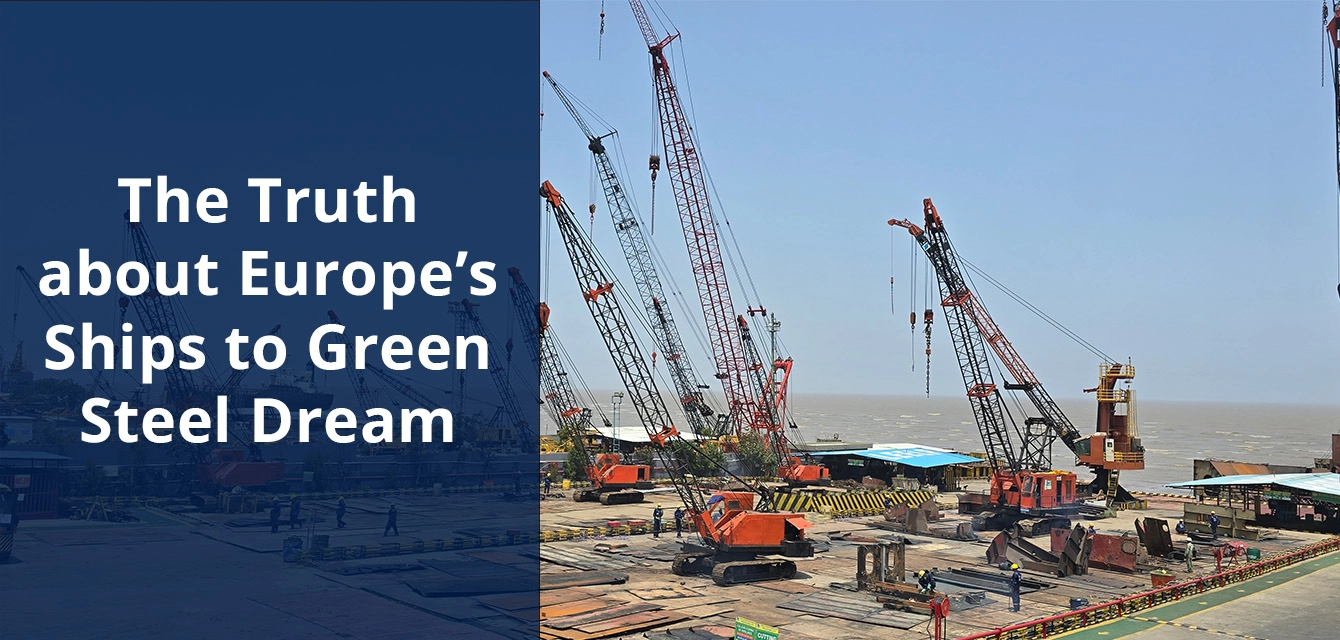
Marine Metals, a new company led by former Euronav chief Hugo De Stoop, has announced plans to base large-scale ship recycling in Europe and supply low-carbon steel to the market. The idea sounds straightforward: ...
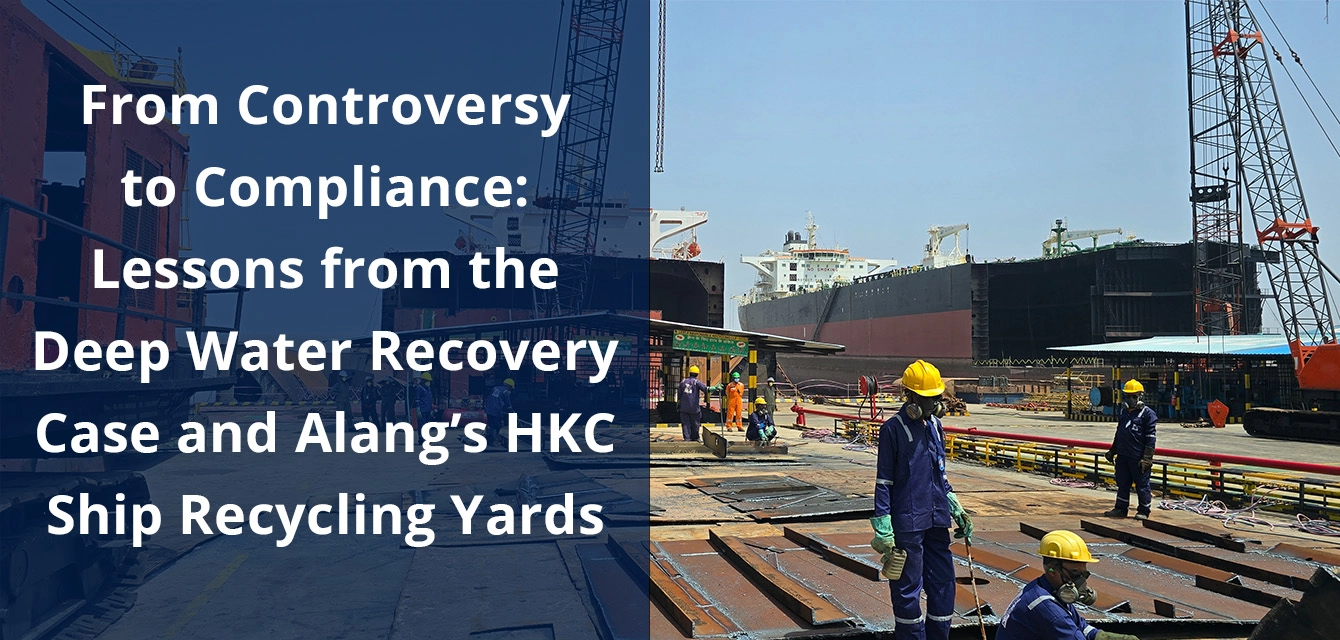
Ship recycling, or green ship dismantling, is a necessary part of global shipping. Each year, ...


Download GMS App